
Last updated September 10, 2026
Level 1 sweep and inspection to the NFPA 211 annual standard - flue, crown, cap, and flashing checked and photographed
Chimney sweep logs do not sweep chimneys. They loosen some creosote - which then falls where a brush and vacuum still have to collect it.
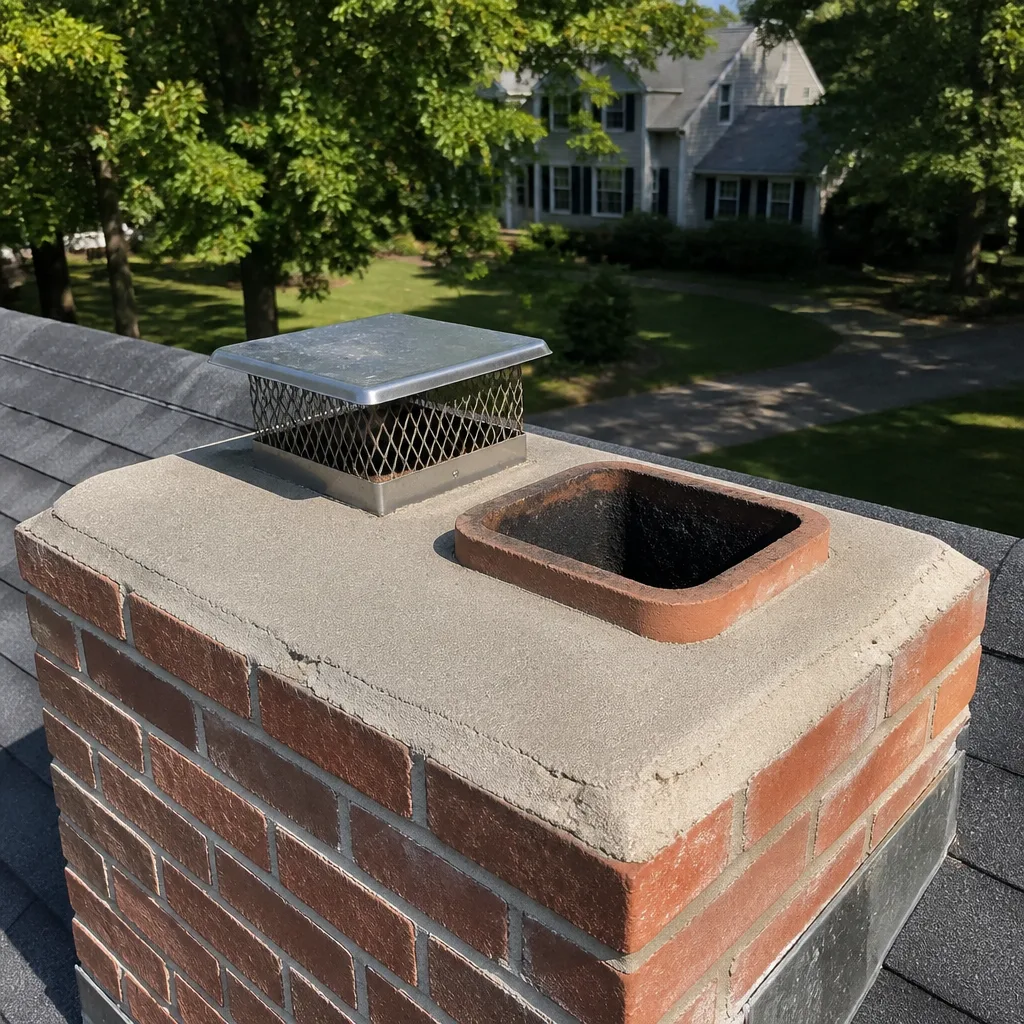
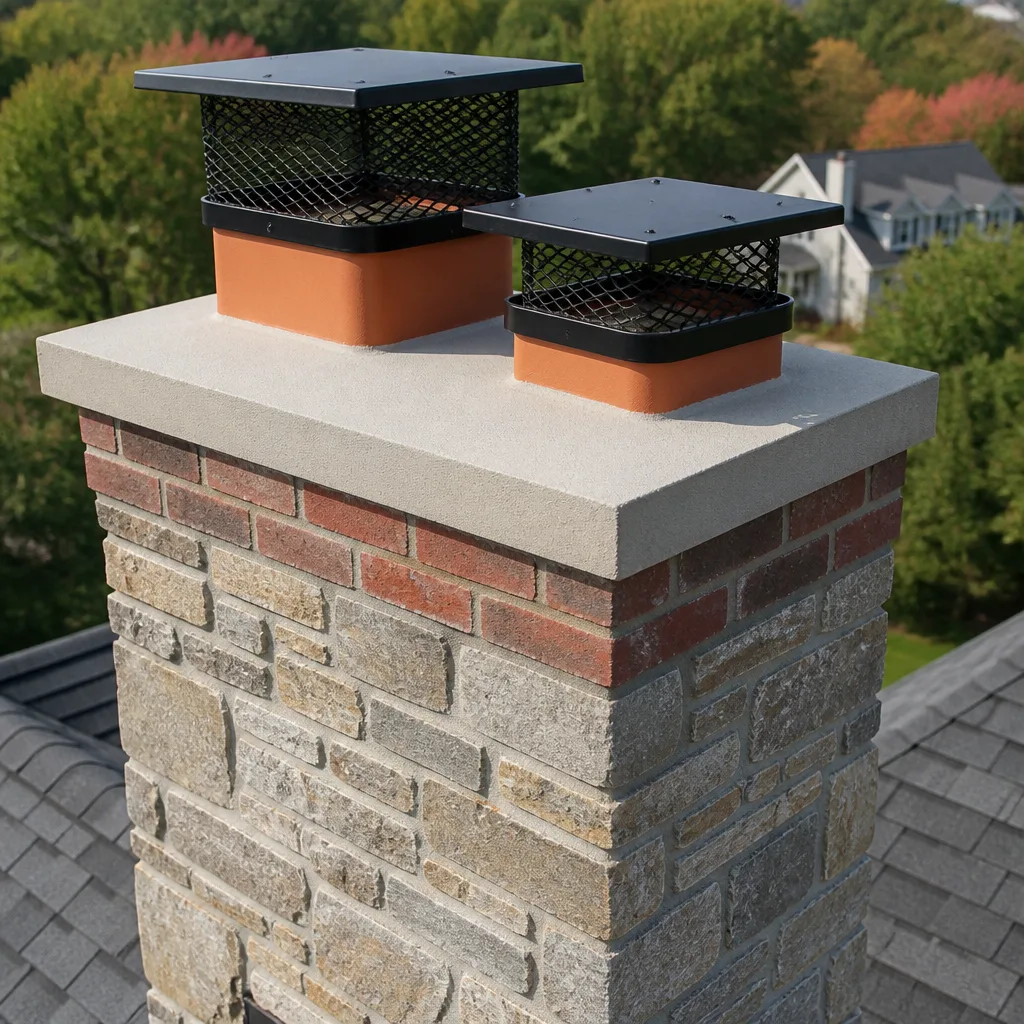
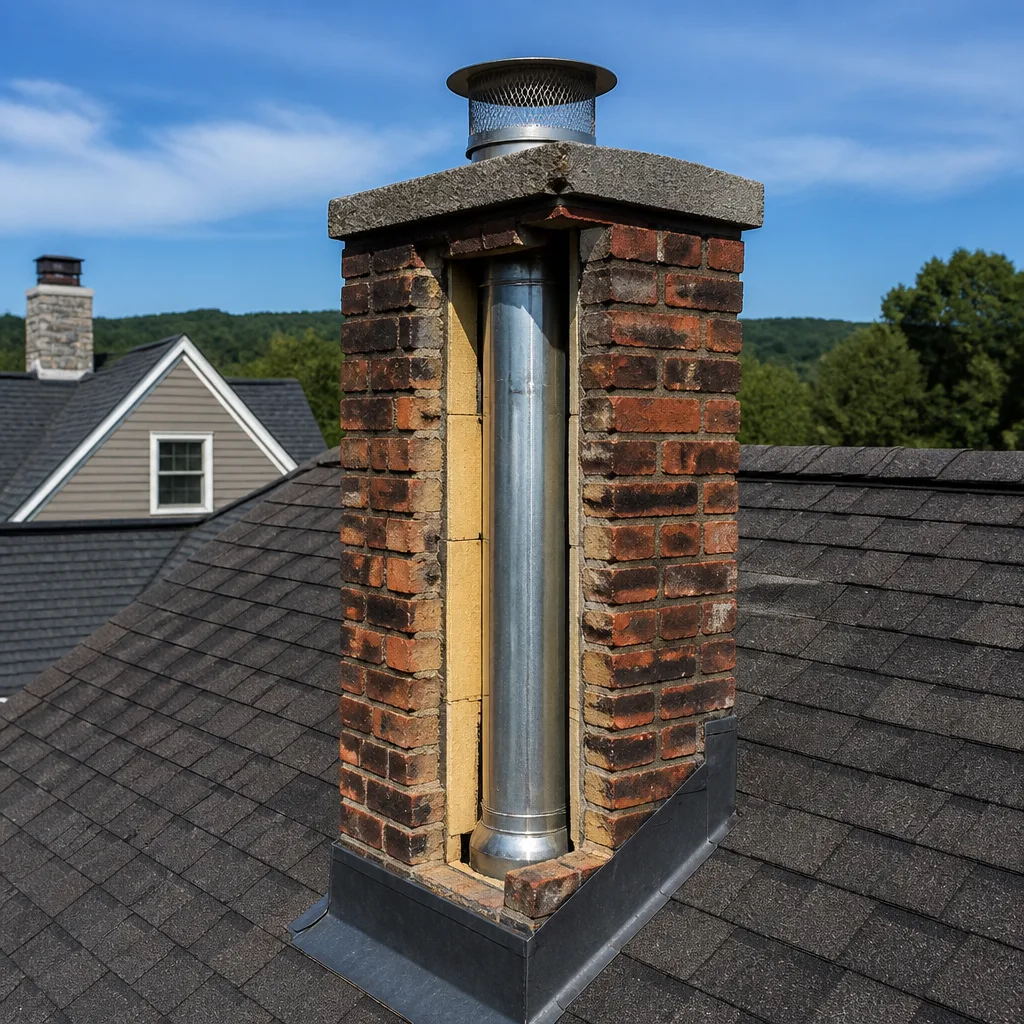
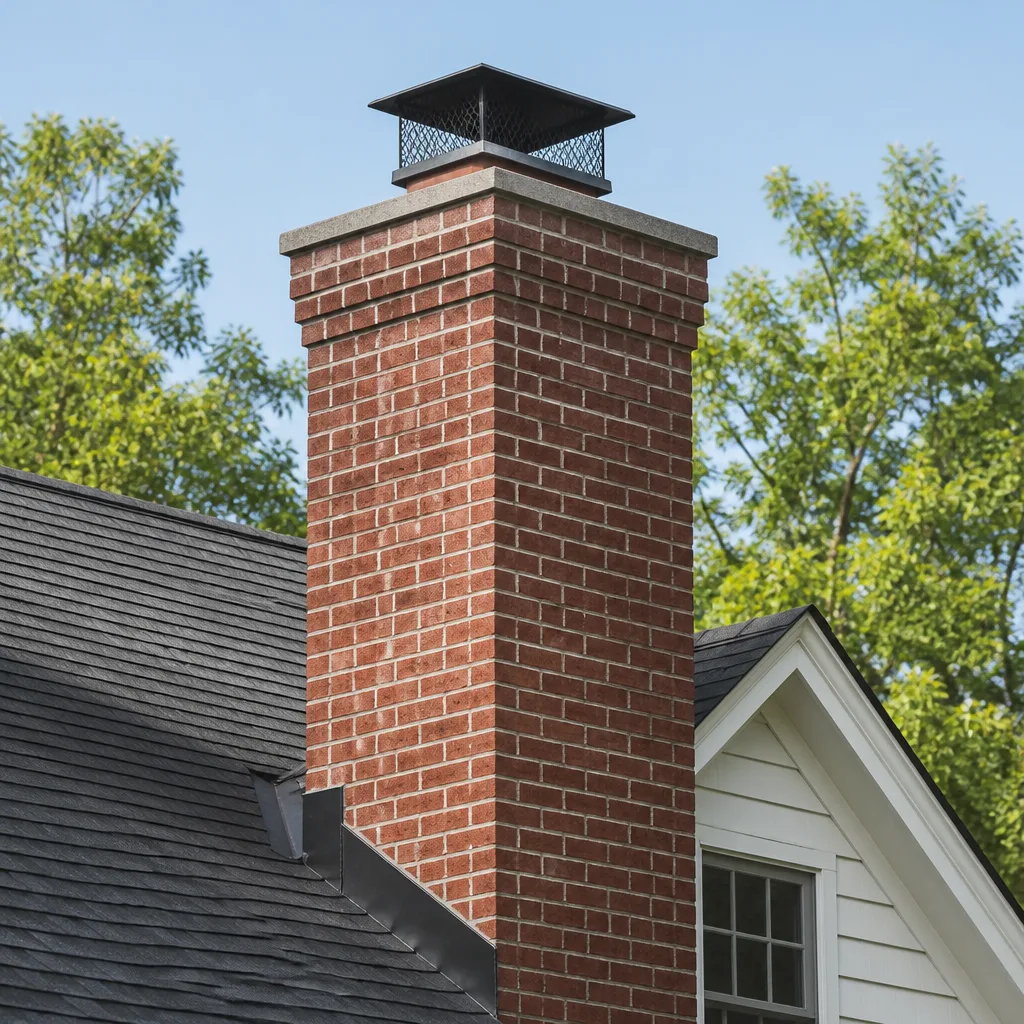
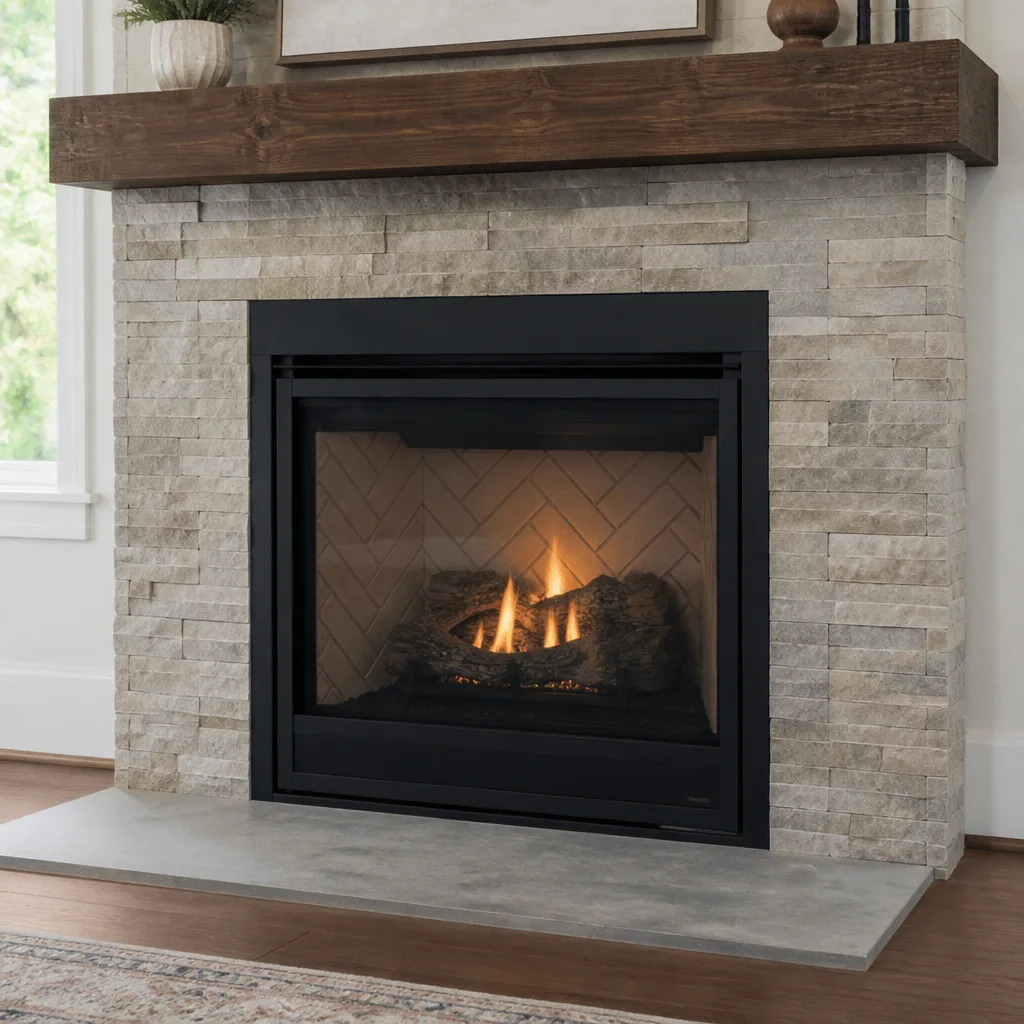
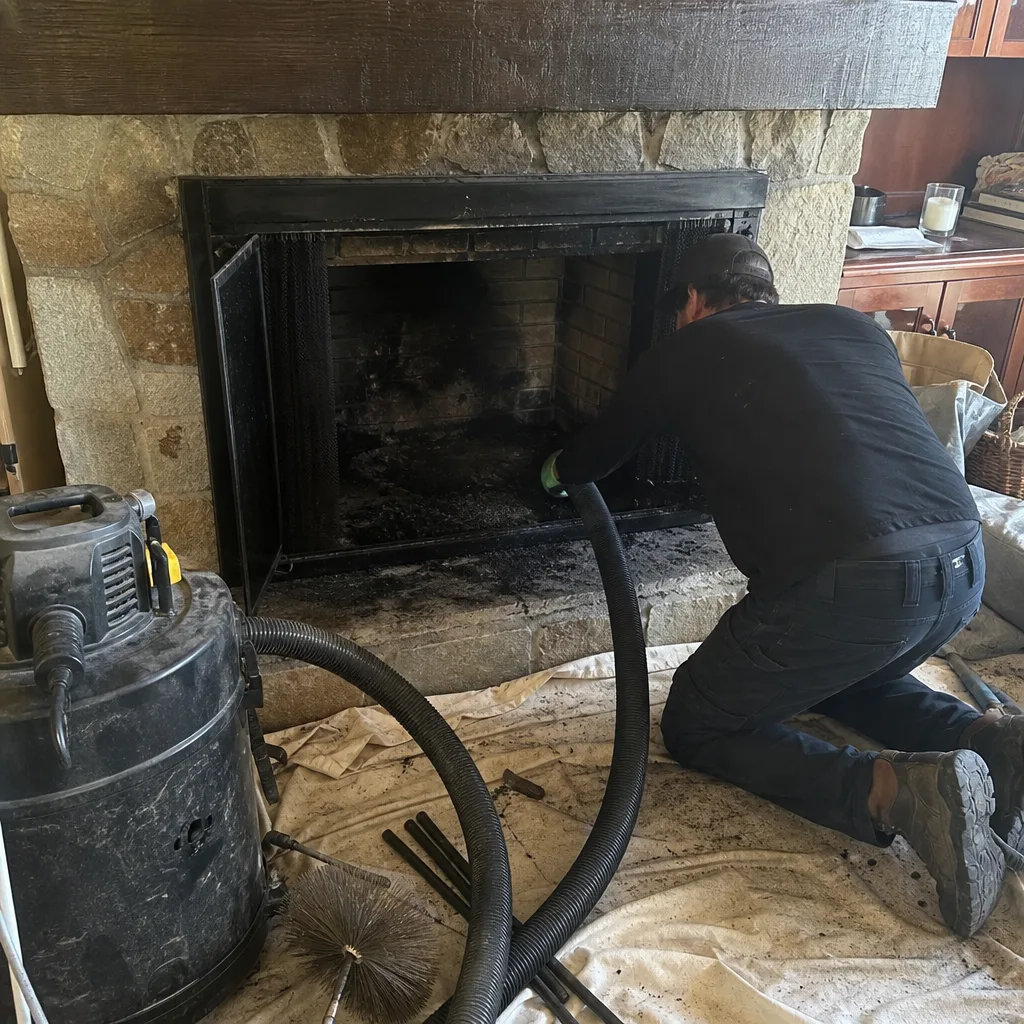 Before
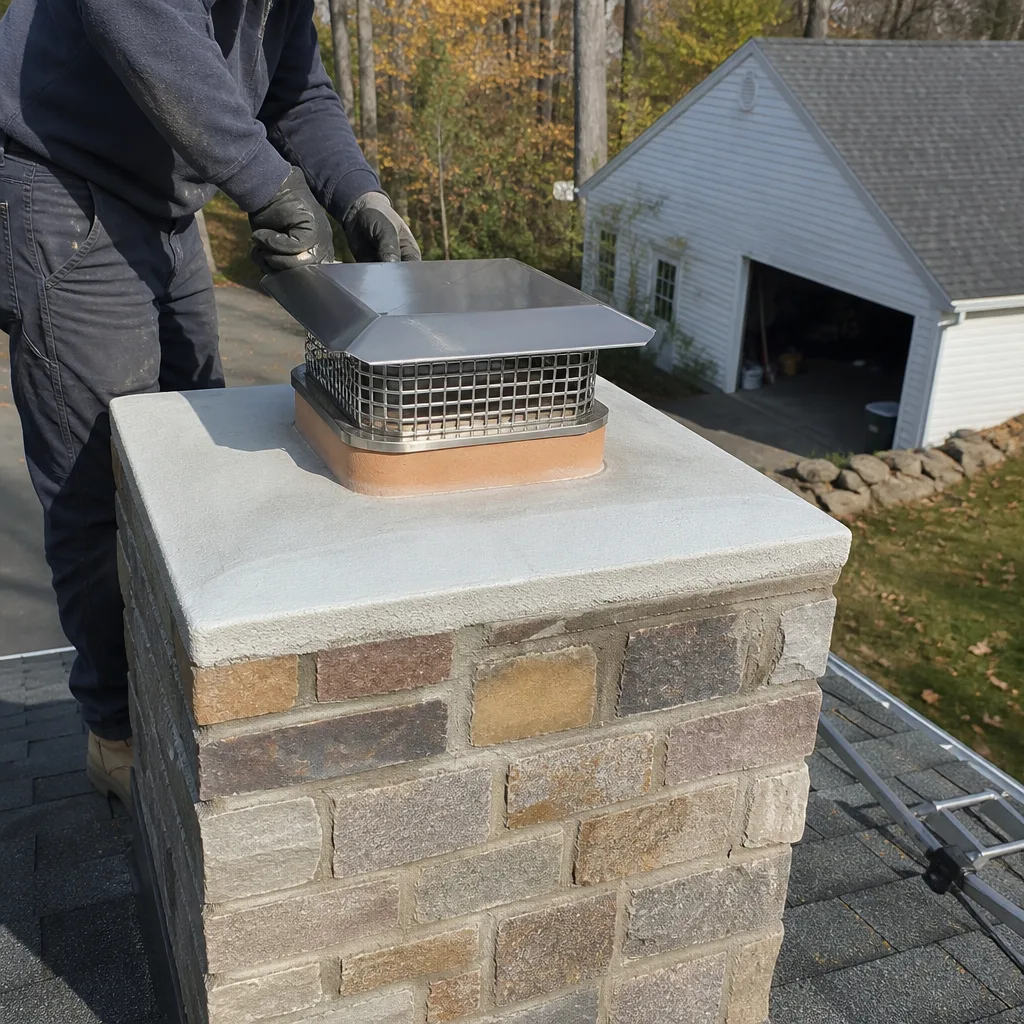 After
After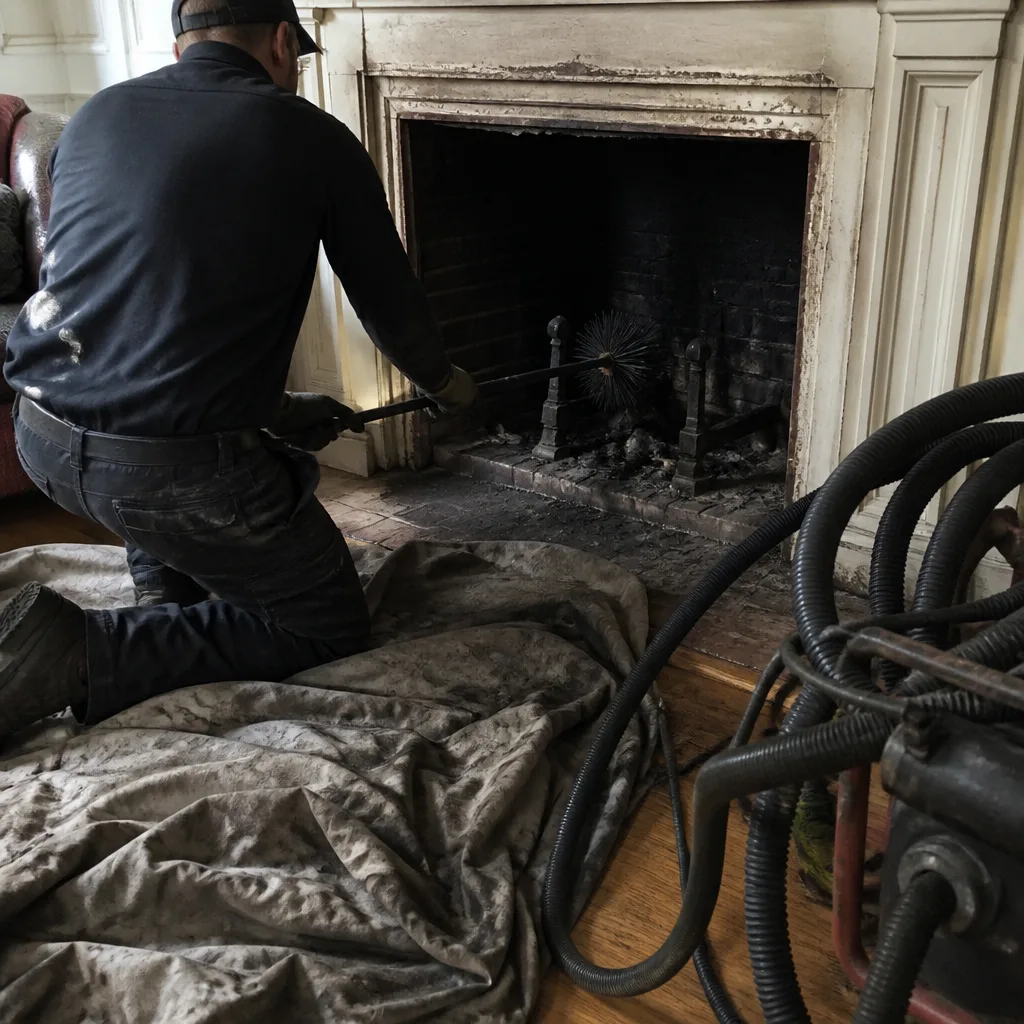 Before
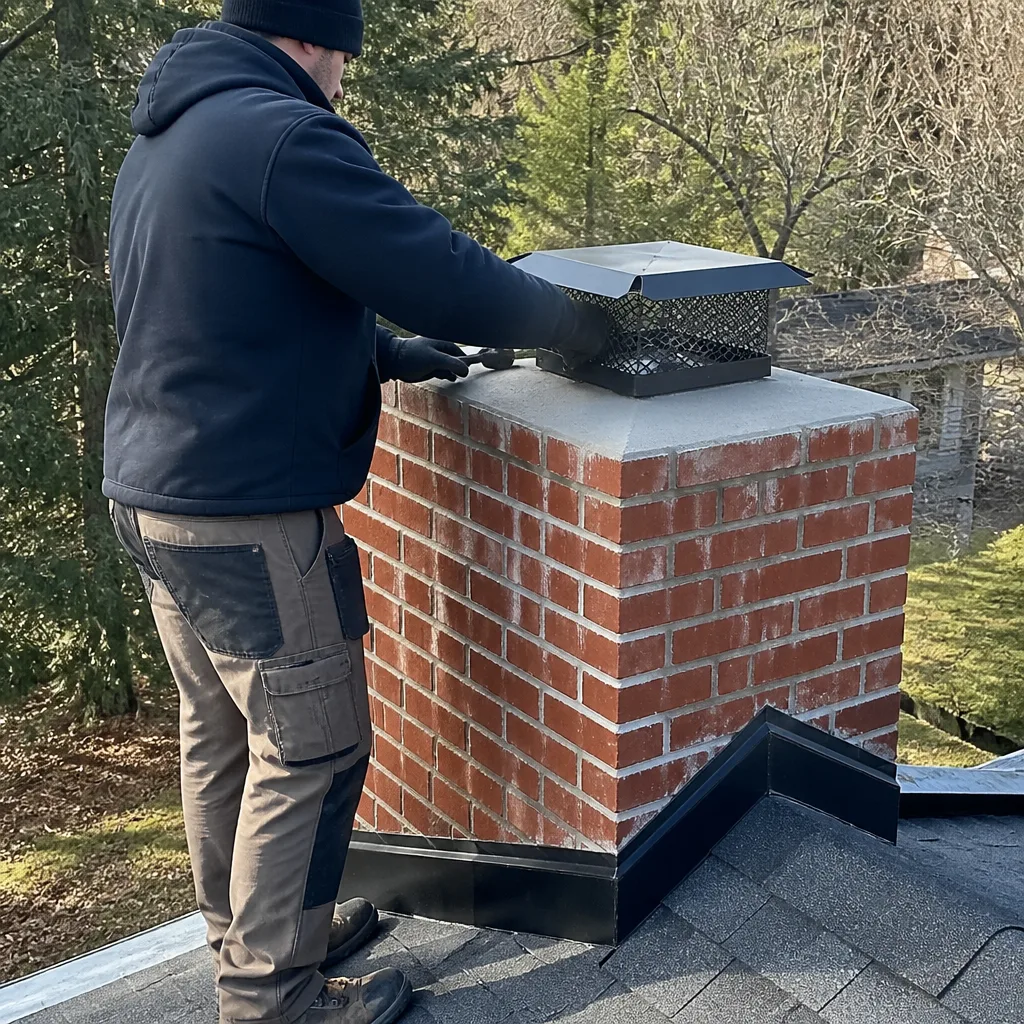 After
After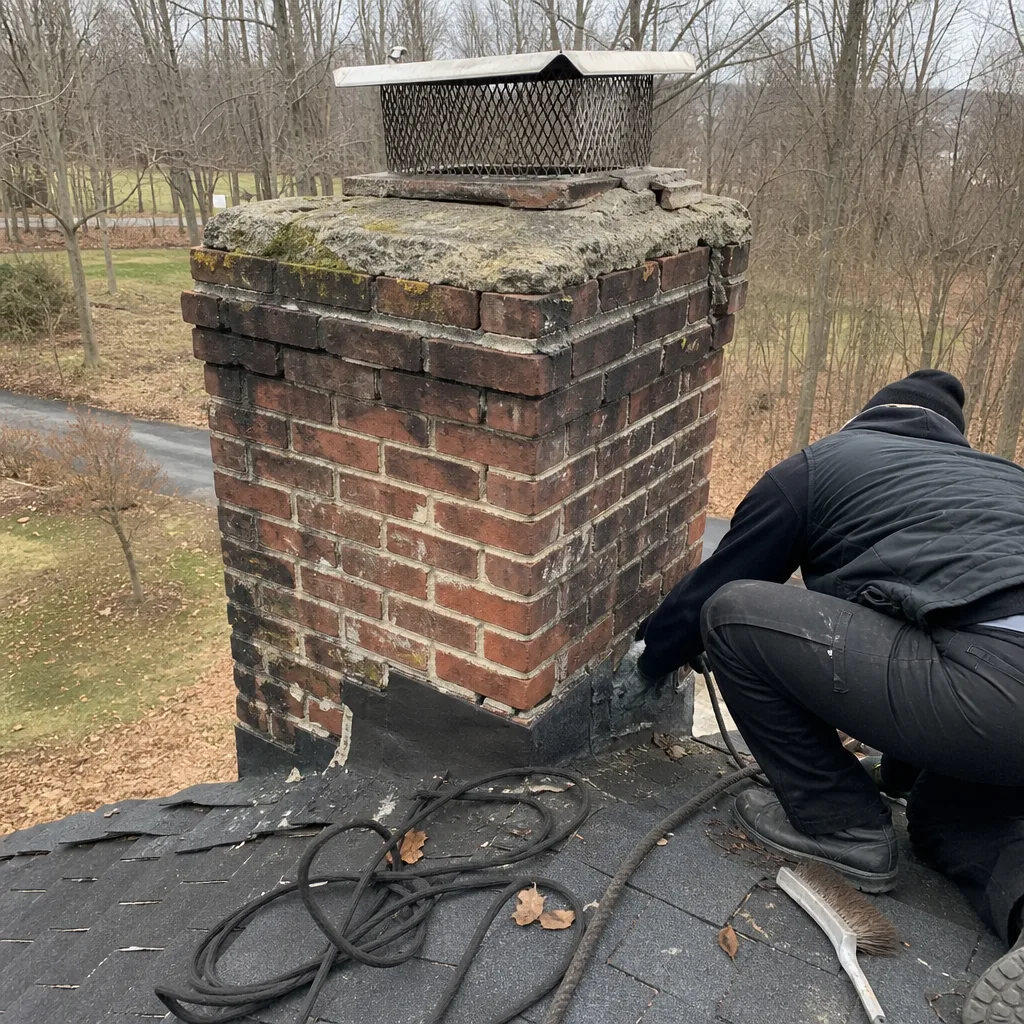 Before
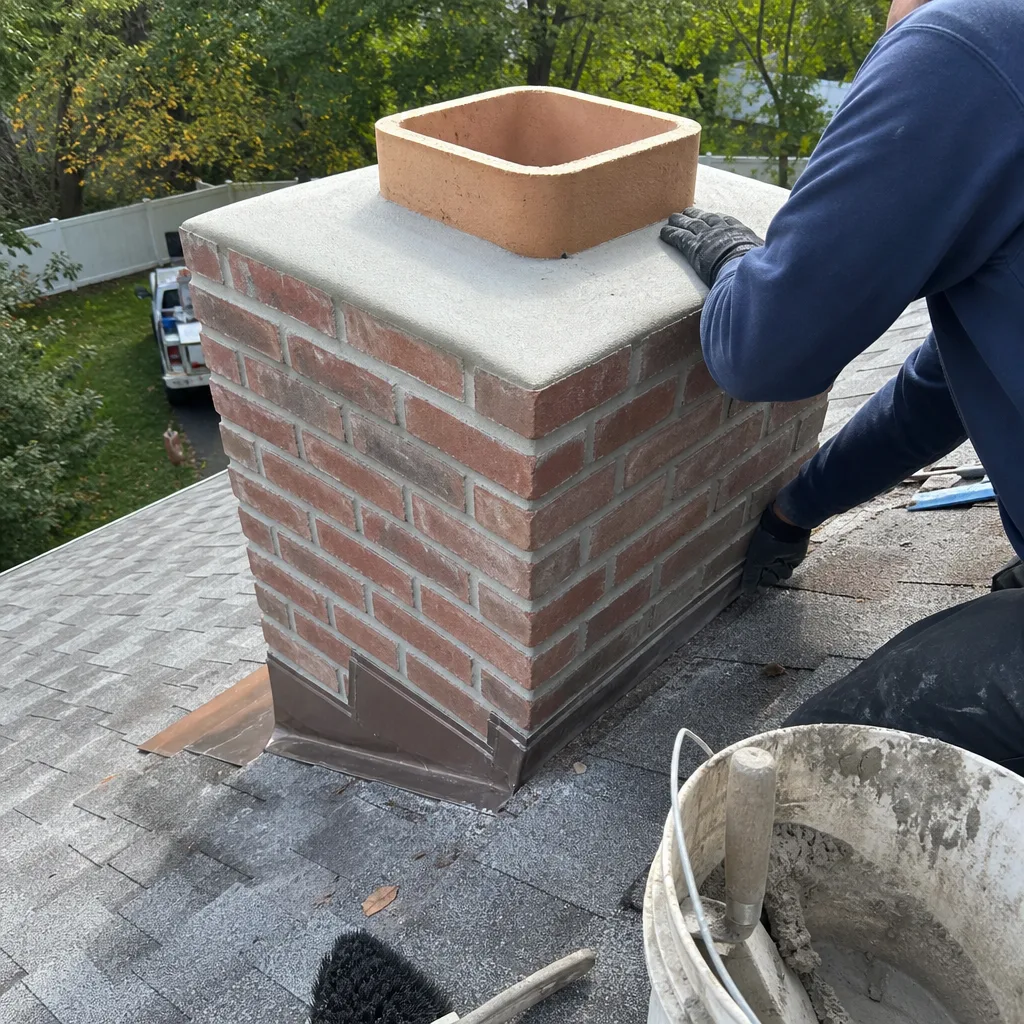 After
AfterDIY vs Professional Chimney Cleaning: The Bedford Homeowner’s Decision Guide
You can sweep your own flue. What you cannot do is identify a cracked terracotta tile behind a clean-looking soot layer, and that crack is the difference between a functioning chimney and a house fire. Most Bedford homeowners who ask us about DIY chimney cleaning are trying to solve the right problem the wrong way. They’re worried about creosote buildup, which is valid. But creosote removal is only one-third of what keeps a chimney safe. The other two-thirds, structural integrity and proper venting, require tools and training that don’t fit in a hardware store cart. In this guide, we’ll show you exactly what DIY cleaning can accomplish, what it cannot, and how to decide which path fits your specific situation in Bedford. For more guidance on hiring professional help, see our step-by-step resource.
Quick Answer
DIY chimney cleaning can safely remove light soot from a metal flue in a newer home with a straight, short run, but it cannot assess structural damage, flue liner condition, or proper draft function. For most Bedford homes, especially those built before 1990 with masonry construction, professional cleaning with a Level-2 camera inspection is the only way to verify that the chimney is actually safe to use, not just clean.
Table of Contents
- What DIY Chimney Cleaning Can Actually Accomplish
- The Three Risks DIY Cleaning Cannot See
- The Equipment Reality Check: Consumer vs. Professional
- Why Bedford’s Older Homes Change the Calculation
- Insurance, Liability, and the Paperwork Gap
- A Plain Decision Framework for Bedford Homeowners
- Cost Comparison: Real Numbers for the Bedford Market
- Common Mistakes to Avoid
- When to Call a Professional
- Frequently Asked Questions
- The Bottom Line
What DIY Chimney Cleaning Can Actually Accomplish
DIY chimney cleaning is not a hoax. For a narrow set of conditions, it is a reasonable maintenance step. The question is whether your chimney fits that narrow set.
Here’s what a homeowner with a basic brush kit can legitimately achieve:
- Remove light, powdery soot from a metal flue. If you burn only seasoned hardwood, clean your flue annually, and have a stainless steel liner, a poly brush on a flexible rod can knock down loose deposits before they harden into glazed creosote.
- Maintain a short, straight flue run. A metal chimney pipe that rises straight from a basement wood stove through a single-story roof is the simplest geometry to clean. Every offset, bend, or transition adds complexity that consumer equipment cannot navigate effectively.
- Spot obvious external problems. A homeowner can see a missing chimney cap, damaged flashing, or vegetation growing from mortar joints. These are worth noting, though they still require professional repair.
The bounded conditions where DIY makes sense in Bedford: a home built after 1990 with a factory-built fireplace and metal flue, no known prior damage, annual burning of less than one cord of seasoned hardwood, and a previous professional inspection within the last three years confirming clean structural condition. Step outside any of these lines, and the risk profile shifts dramatically.
What DIY cannot do, even under ideal conditions, is verify that the chimney is structurally sound, properly lined, and drafting correctly. Clean soot does not mean safe operation. We’ve seen flues in Bedford Hills that looked pristine from the firebox but had shifted liner sections creating a gap that vented carbon monoxide into a bedroom wall cavity. No brush kit finds that.
The chimney cleaning and sweep services we provide in Bedford include full structural assessment as standard, because cleaning without inspection is incomplete work.
The Three Risks DIY Cleaning Cannot See
The thesis of this guide is simple: DIY cleaning addresses one of three critical chimney conditions. The other two are invisible without professional equipment and training. Here’s what you’re not seeing.
Risk One: Structural Degradation Behind the Soot
Masonry chimneys in Bedford, especially in neighborhoods like Bedford Village and Bedford Corners, often date to the 1960s, 1970s, or earlier. The terracotta flue tiles inside that brick stack expand and contract with every heating cycle. Over decades, they crack. The cracks may be hairline at first, then widen. Soot and creosote fill those cracks, masking them from view.
A homeowner cleaning their own flue sees black walls that look uniform. A professional with a camera sees a crack pattern that indicates thermal shock damage, spalling tile edges, or mortar joint failure between flue sections. These conditions allow heat and combustion gases to escape the flue and ignite adjacent framing. The chimney repair work we do in Bedford frequently begins with a camera finding damage that a dozen DIY cleanings would have missed entirely.
Risk Two: Liner Condition and Compatibility
Bedford’s housing stock includes chimneys with no liner, original clay liners, poured refractory liners, and aftermarket stainless steel liners. Each type ages differently. An unlined masonry chimney in a 1920s farmhouse near the Mianus River Gorge has different failure modes than a 1985 chimney with a cracked HeatShield cerfractory liner.
DIY cleaning tells you nothing about liner condition. Is the stainless steel liner still securely attached at the top? Has the clay tile liner suffered vertical cracking from a chimney fire the previous owner never disclosed? Is the liner properly sized for the appliance it’s venting? An undersized liner causes creosote to form faster. An oversized liner causes poor draft and condensation damage. Only measurement and camera inspection answer these questions.
We install DuraFlex and Olympia Chimney liners when replacement is needed, but the first step is always knowing whether replacement is necessary. That requires looking.
Risk Three: Draft Performance and Clearance to Combustibles
A chimney can be clean and structurally intact yet still dangerous if it doesn’t draft properly. Negative pressure in modern tight homes, competing exhaust appliances, or improper chimney height relative to roof peaks can all cause smoke spillage or carbon monoxide backdrafting.
Professional inspection includes draft testing and evaluation of clearance to combustibles, the required distance between the chimney structure and any framing, insulation, or other burnable material. In older Bedford homes with modified attics or finished basements, these clearances are often compromised by renovations that never pulled a permit. DIY cleaning has no mechanism to discover this.
The three categories, structural, liner, and draft, represent the complete safety picture. DIY addresses only the surface layer of one. The other two-thirds remain unexamined.
The Equipment Reality Check: Consumer vs. Professional
Bedford homeowners are practical people. They want to know what they’re actually getting for their money, and whether they can replicate the result themselves. Here’s the honest equipment comparison.
A consumer chimney cleaning kit from a hardware store or online retailer typically costs $40 to $80. It includes a polypropylene brush, three to six flexible rods that snap together, a basic fiberglass drop cloth, and sometimes a cheap ash vacuum. The brush diameter is fixed. The rods are lightweight and prone to separation in a tight flue. The vacuum, if included, lacks HEPA filtration and will redistribute fine particulate through your living space.
A professional-grade cleaning rig, the kind our technicians bring to every Bedford job, runs substantially more. The rotary cleaning system alone, a powered brush that adapts to flue diameter and deposits type, costs several thousand dollars. The HEPA vacuum system is a separate investment in the thousands. The inspection camera, essential for Level-2 work, adds another significant cost. The rods are professional-grade fiberglass or steel, designed not to separate under torque. Technicians carry multiple brush types: poly for light soot, flat wire for glazed creosote, and specialized heads for masonry versus metal flues.
The equipment difference translates directly to result quality. A consumer brush skims loose material from a straight flue. A professional rotary system mechanically removes glazed creosote that has bonded to flue walls, the dangerous buildup that causes chimney fires. The camera documents condition before and after. The HEPA system contains respirable silica and combustion byproducts that a shop vacuum would blow through your HVAC system.
For a Bedford homeowner burning two or more cords annually, or anyone with a masonry chimney over twenty years old, the equipment gap alone justifies professional service. You’re not paying for a brush on a stick. You’re paying for mechanical capability, documentation, and containment that consumer equipment cannot replicate.
Why Bedford’s Older Homes Change the Calculation
Bedford’s architectural character is part of its appeal. It’s also part of its chimney risk profile. The town’s historic districts and established neighborhoods contain housing stock that demands professional attention for reasons specific to this market. Our Seasonal Chimney Cleaning Care for Bedford covers year-round maintenance priorities for these older homes.
Many Bedford homes, particularly in Bedford Village, Bedford Hills, and Katonah adjacent areas, were built before modern chimney codes existed. A 1950s colonial may have an unlined masonry chimney serving a modern insert installed by a previous owner who never verified compatibility. A 1970s raised ranch may have a factory-built chimney with original components no longer manufactured, making replacement parts unavailable without full system changeout.
The freeze-thaw cycle in Westchester County accelerates masonry deterioration. Bedford’s elevation and tree cover create microclimates where chimneys stay damper longer, promoting spalling and freeze damage. We’ve repointed chimney crowns in Bedford that showed significant deterioration after just five years, where the same construction in a drier climate might have lasted fifteen.
Local building codes have evolved. Work performed without permits in earlier decades, common in Bedford’s renovation history, may not meet current standards for clearance to combustibles or liner sizing. Only professional inspection can identify these legacy conditions.
The fireplace services we provide in Bedford frequently begin with homeowners who assumed their system was standard, only to discover unique configurations requiring specialized knowledge and materials. Gelco caps, for instance, fit specific flue profiles that must be measured precisely. An incorrect cap installation traps moisture and accelerates deterioration.
For Bedford homeowners in homes built before 1990, the DIY calculation is not simply “can I clean this?” It’s “do I understand the specific system in my wall well enough to know whether cleaning is even the right intervention?” In most cases, the answer is no, and that’s not a failure of homeowner capability. It’s a recognition that forty years of building code evolution, modification, and weather exposure create conditions that require trained assessment.
Insurance, Liability, and the Paperwork Gap
This section addresses a question few homeowners ask until it’s too late: what happens to your insurance position if a chimney-related loss occurs and you cannot produce professional certification of maintenance?
Homeowner’s insurance policies typically cover fire damage, but coverage can be contested if the insurer determines that negligence contributed to the loss. A chimney fire that originates in a flue that was “maintained” by DIY cleaning, without professional inspection documentation, creates a gray area that insurers may exploit to reduce or deny claims.
The critical distinction is between cleaning and certification. DIY cleaning removes visible soot. It does not produce a dated, documented professional assessment of flue condition, liner integrity, and code compliance. In a post-loss investigation, the absence of such documentation shifts burden to the homeowner to prove that the chimney was properly maintained. That proof is difficult to establish with hardware store receipts and personal testimony.
Professional service from a licensed, insured chimney company provides:
- A dated invoice specifying services performed
- A written condition report, often with photographs
- Certification that the chimney was safe to operate at the time of service
- Liability insurance backing the company’s work
The 90-Day Done Right Promise we provide with every Hearthstone job is not merely a satisfaction guarantee. It’s a documented professional relationship that establishes maintenance history. If a problem arises, there is a paper trail, a responsible party, and insurance coverage.
For Bedford homeowners who have invested decades in their properties, this documentation is part of sound asset protection. The cost of professional service is minor compared to the potential exposure of an uncovered fire loss or the legal defense of an insurance dispute.
A Plain Decision Framework for Bedford Homeowners
We’ve laid out the capabilities and limitations. Here’s how to apply them to your specific situation. This framework assumes you’re evaluating whether to clean your own chimney or hire Hearthstone Chimney Co. or another qualified professional.
Consider DIY only if ALL of the following are true:
- Your home was built in 1990 or later with a factory-built fireplace and listed metal chimney system.
- You have a previous professional Level-2 inspection within the last three years that found clean structural condition with no recommendations for repair or monitoring.
- You burn only seasoned hardwood, less than one cord annually, with no paper, cardboard, or artificial logs.
- Your flue run is straight or has only one gentle offset, accessible from top or bottom without roof work.
- You have no history of chimney fire, smoke spillage, or carbon monoxide alarm events.
- You can verify that your chimney cap is intact and properly fitted, with no water intrusion history.
Hire a professional if ANY of the following apply:
- Your home was built before 1990, regardless of apparent condition.
- You burn more than one cord annually, or you burn softwood, pressed logs, or anything other than seasoned hardwood.
- Your last professional inspection was more than three years ago, or you’ve never had one.
- You’ve noticed any smoke smell when the fireplace is not in use, any draft inconsistency, or any change in burn behavior.
- Your chimney serves a wood stove, insert, or appliance other than the original construction.
- You’ve had any water intrusion, masonry damage, or chimney fire history, however minor.
- You plan to sell your home within two years and need transferrable documentation of condition.
For Bedford homeowners in the gray zone, consider this: a professional inspection with cleaning costs less than a single emergency service call for a chimney fire or carbon monoxide alarm response. The inspection either confirms your system is sound, giving you confidence, or finds a condition that DIY cleaning would have missed entirely. Either outcome has value that exceeds the service cost.
Cost Comparison: Real Numbers for the Bedford Market
Bedford homeowners deserve specific pricing context, not vague “call for estimate” language. Here’s what the local market actually looks like for chimney services, with detailed figures in our Chimney Cleaning Cost Breakdown: The Bedford Homeowner’s Reference for 2026.
DIY Costs:
- Basic brush kit with rods: $40-$80
- Replacement brushes (annual): $15-$30
- Shop vacuum with fine particulate bags: $80-$150
- Drop cloths, PPE, cleaning supplies: $30-$50
- First-year total: $165-$310
- Ongoing annual (brushes, bags, supplies): $50-$100
Professional Costs in Bedford:
- Standard chimney sweep with Level-1 inspection: $250-$350
- Level-2 inspection with camera documentation: $350-$500
- Combination sweep and Level-2 inspection: $400-$550
- Seasonal Tune-Up (Hearthstone standing offer): $89
The price gap narrows when you account for equipment amortization, time value, and the cost of correcting DIY mistakes. A separated brush rod stuck in a flue requires a professional extraction call that exceeds the original service cost. A HEPA vacuum purchase for safe DIY particulate containment adds $400-$800 to first-year DIY costs.
More importantly, professional service includes the inspection component that DIY lacks. Comparing DIY cleaning cost to professional sweep cost is comparing incomplete maintenance to complete maintenance. The fair comparison is DIY cleaning plus professional inspection, which eliminates most apparent savings.
Hearthstone’s standing offers include $50 off any repair over $250, a free second opinion on any written estimate, the $89 Seasonal Tune-Up, and a permanent 5% senior and veteran discount. These are not introductory come-ons. They’ve been available for years because we’d rather earn a long-term customer than maximize a single transaction.
Common Mistakes to Avoid
- Assuming a clean-looking firebox means a clean flue. The firebox is the visible part. The flue above it can be heavily coated with glazed creosote while the firebox shows only light ash. We’ve cleaned Bedford chimneys where the homeowner was certain no buildup existed because they could “see up the flue” from below.
- Using the wrong brush material for the flue type. A wire brush in a metal flue scratches and damages the liner surface, creating corrosion points. A poly brush in glazed creosote on masonry merely polishes the buildup without removing it. The right tool for the job is not optional.
- Cleaning from the top without proper roof safety equipment. Bedford’s mature neighborhoods mean steep roofs, often with moss or leaf debris. Falls from roof level are a leading cause of homeowner injury during chimney maintenance. Professional technicians use harnesses, anchor points, and ladder stabilization that most homeowners do not own.
- Ignoring the smoke chamber and damper assembly. Creosote accumulates in the smoke chamber above the damper, a space difficult to reach with consumer equipment. This accumulation is a common ignition point for chimney fires that originate above the firebox.
- Skipping inspection after cleaning. Even homeowners who clean competently rarely inspect adequately. The cleaning process itself can dislodge debris that reveals underlying damage, or occasionally cause minor damage that needs documentation. Cleaning without inspection is maintenance without verification.
- Using chemical logs or sprays as a substitute for mechanical cleaning. These products modify creosote chemistry but do not remove buildup. They can create a false sense of security while leaving hazardous deposits in place. Mechanical removal is the only recognized standard.
- Waiting for visible problems before acting. By the time a Bedford homeowner sees staining on a ceiling near the chimney, smells smoke in an upstairs room, or notices exterior masonry damage, the underlying condition has typically progressed well beyond early intervention stage. Preventive inspection catches conditions before they become visible and expensive.
When to Call a Professional
Call a professional chimney sweep when your home falls outside the narrow DIY-suitable conditions described above, when you cannot remember your last professional inspection, or when any change in fireplace behavior occurs. Specific triggers include smoke spillage into the room, draft inconsistency, unusual odors, visible exterior damage, or any carbon monoxide alarm event.
For Bedford homeowners, the seasonal pattern matters. Westchester County’s burning season runs roughly October through April. Scheduling inspection and cleaning in late summer or early fall ensures availability and avoids the emergency-call premium that comes with first-cold-snap demand. Waiting until November often means two- to three-week delays across the region.
Hearthstone Chimney Co. offers free estimates in Bedford. A call to (914) 409-9387 connects you to a live person, 24 hours a day, seven days a week. No voicemail, no callback queue. We’ll schedule a visit, perform a documented inspection with photos you can see, and provide a plain-English verdict on what your chimney needs, what it doesn’t need, and what can safely wait. No pressure, no surprises on the bill. Done right, and we stand behind it. Browse our more guides & resources for additional homeowner information.
Frequently Asked Questions
Professional chimney cleaning in Bedford typically ranges from $250 to $350 for a standard sweep with Level-1 inspection, or $400 to $550 for a combined sweep and Level-2 camera inspection. Hearthstone’s Seasonal Tune-Up is available at $89. Call (914) 409-9387 for an exact quote based on your specific chimney configuration - estimates are free.
The National Fire Protection Association recommends annual inspection for all chimneys, with cleaning frequency determined by deposit accumulation. Most Bedford homeowners burning one to two cords of seasoned hardwood annually need annual sweeping. Those burning more, or burning softer woods, may need mid-season cleaning. The only way to know for certain is inspection, not calendar guessing.
You can remove loose soot from a masonry fireplace flue with consumer equipment, but you cannot assess the structural condition of the terracotta liner, the integrity of mortar joints, or clearance to combustibles without professional tools and training. For masonry chimneys, especially those over twenty years old common in Bedford, professional inspection is strongly recommended regardless of cleaning choice.
Skipped cleaning allows creosote to accumulate. Stage-one creosote, fluffy and easily removed, hardens over time into stage-two or stage-three glazed deposits that require mechanical removal. Eventually, a hot fire ignites these deposits, causing a chimney fire that can crack flue liners, damage masonry, and spread to structural framing. Carbon monoxide backup from blocked or damaged flues is the other primary risk, occurring without warning and potentially fatal. The cost of prevention is modest; the cost of consequence is not.
You need a new liner only if inspection reveals that your existing liner is damaged, improperly sized, or absent. In Bedford’s older homes, original clay liners often show vertical cracking, spalling, or joint separation that warrants replacement. We install DuraFlex and Olympia Chimney stainless steel liners when needed, but we also find chimneys where the existing liner is sound for continued use. Nothing is recommended without camera evidence you can see for yourself, and we’ll plainly tell you when work can safely wait. Call (914) 409-9387 to schedule an inspection.
Most homeowner’s policies cover fire damage, but coverage may be reduced or denied if the insurer determines that lack of proper maintenance contributed to the loss. DIY cleaning without professional inspection documentation creates a vulnerable position in post-loss claims. Professional service provides dated, documented evidence of proper maintenance, strengthening your position if a loss occurs.
The Bottom Line
DIY chimney cleaning is a bounded tool for a bounded situation: newer metal flues, light use, recent professional confirmation of sound condition, and straight geometry. For the typical Bedford home, with its masonry construction, age, and burning patterns, DIY cleaning addresses one-third of the safety equation while leaving structural and draft risks unexamined. The real cost comparison is not brush kit versus service call. It’s incomplete maintenance versus complete maintenance, undocumented condition versus documented condition, and personal assumption versus professional verification. The homeowners who sleep soundly through burning season are not the ones who cleaned their own flues. They’re the ones who know, with documented certainty, what condition their chimney is in.
Written by Russell Haines, Owner at Hearthstone Chimney Co., serving Bedford since 2014.