
Last updated September 10, 2026
Level 1 sweep and inspection to the NFPA 211 annual standard - flue, crown, cap, and flashing checked and photographed
Chimney sweep logs do not sweep chimneys. They loosen some creosote - which then falls where a brush and vacuum still have to collect it.
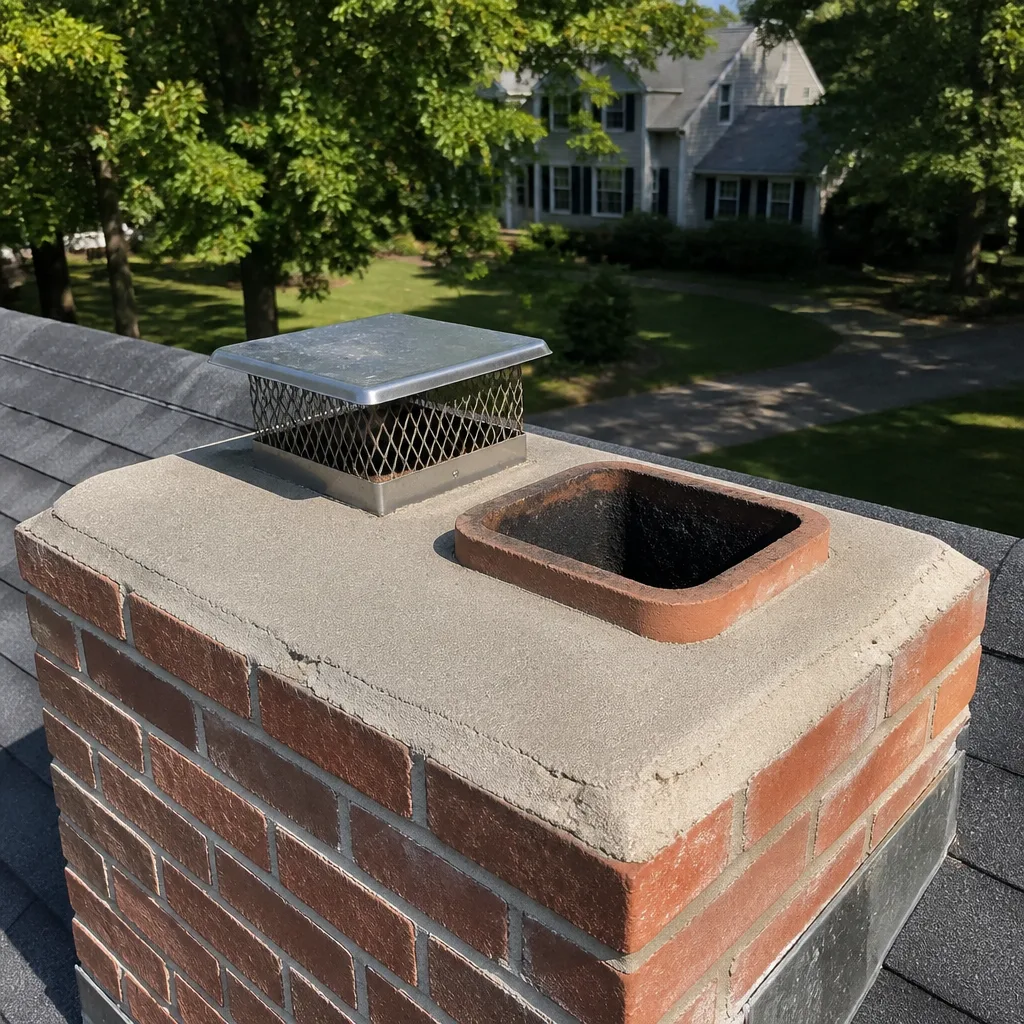
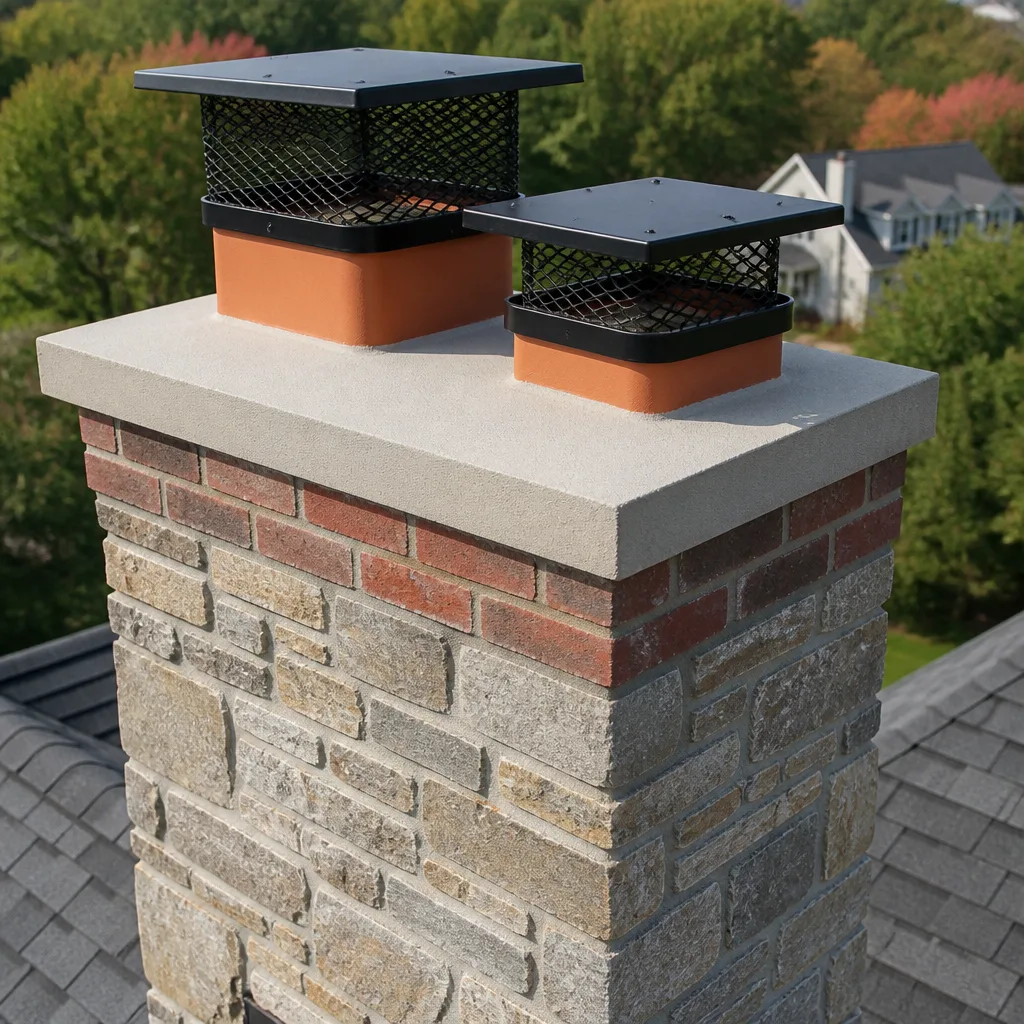
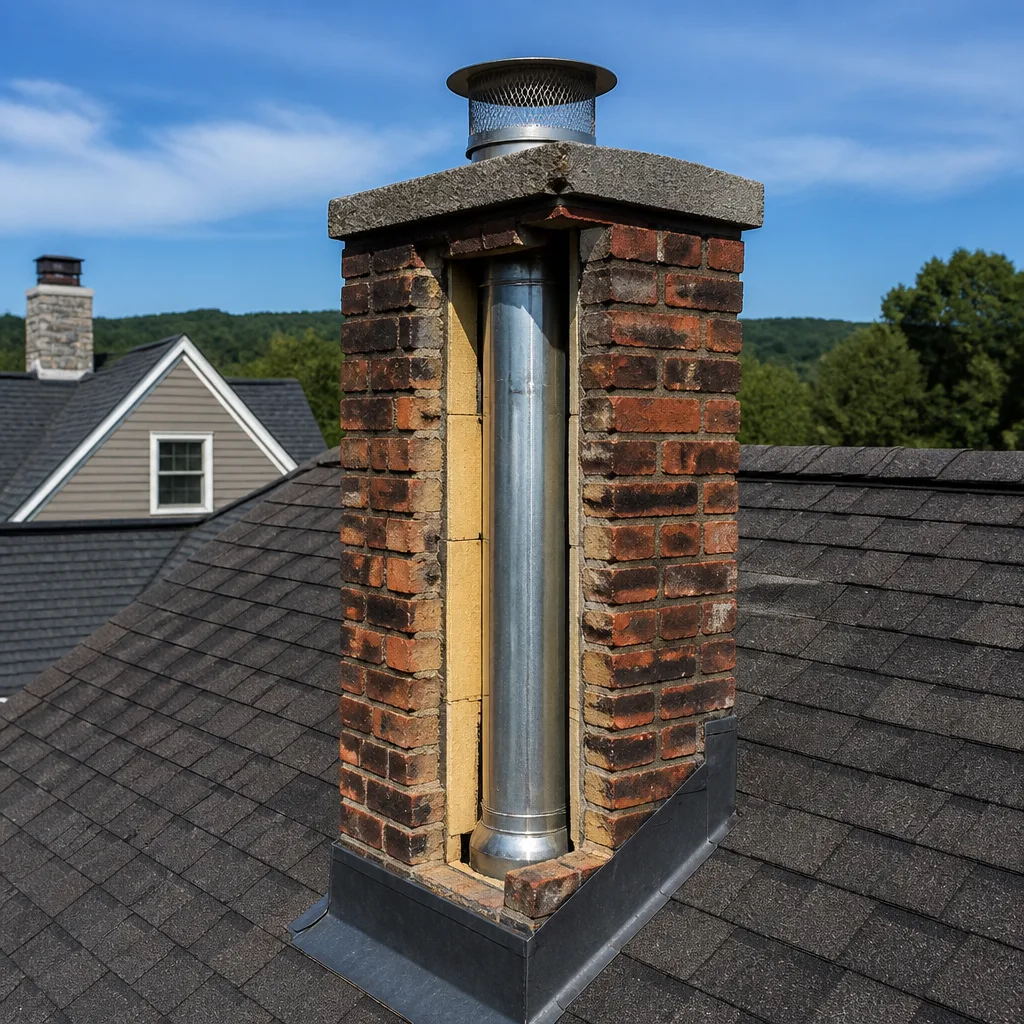
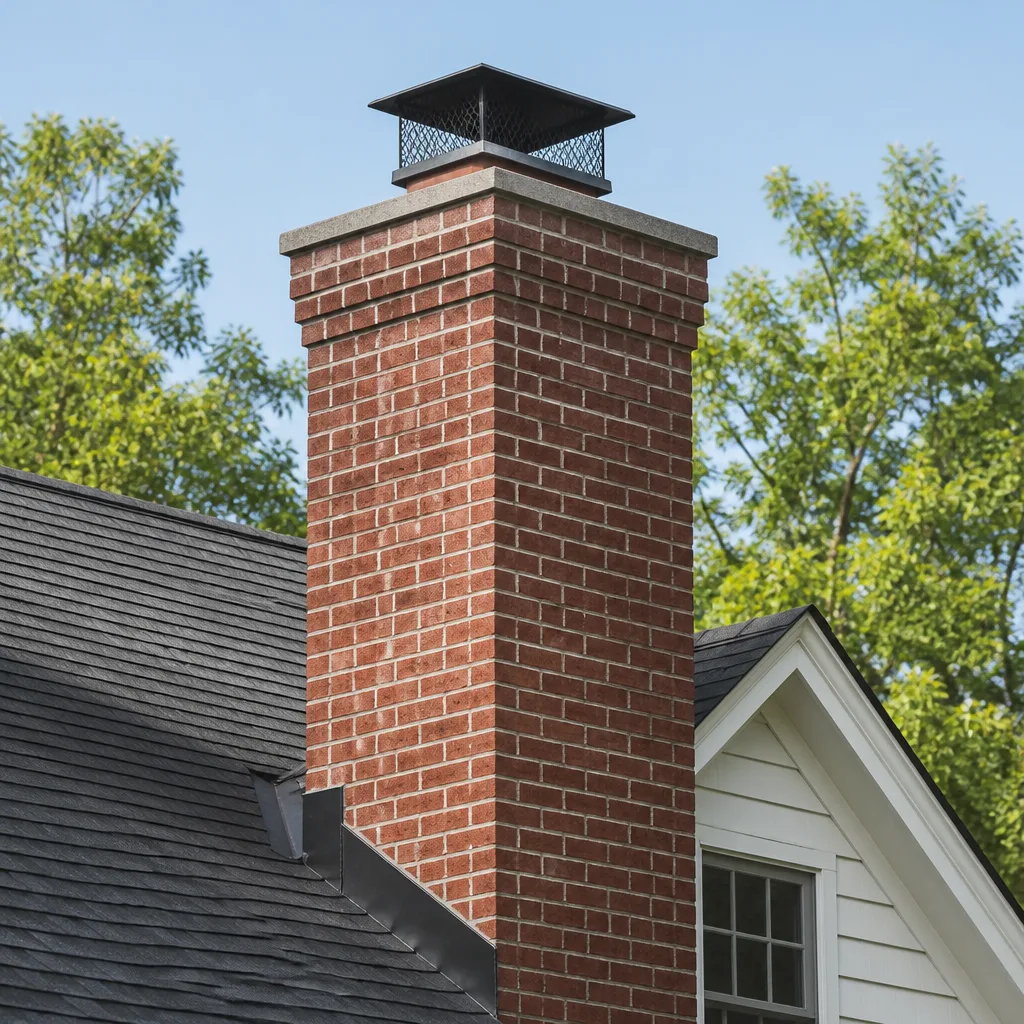
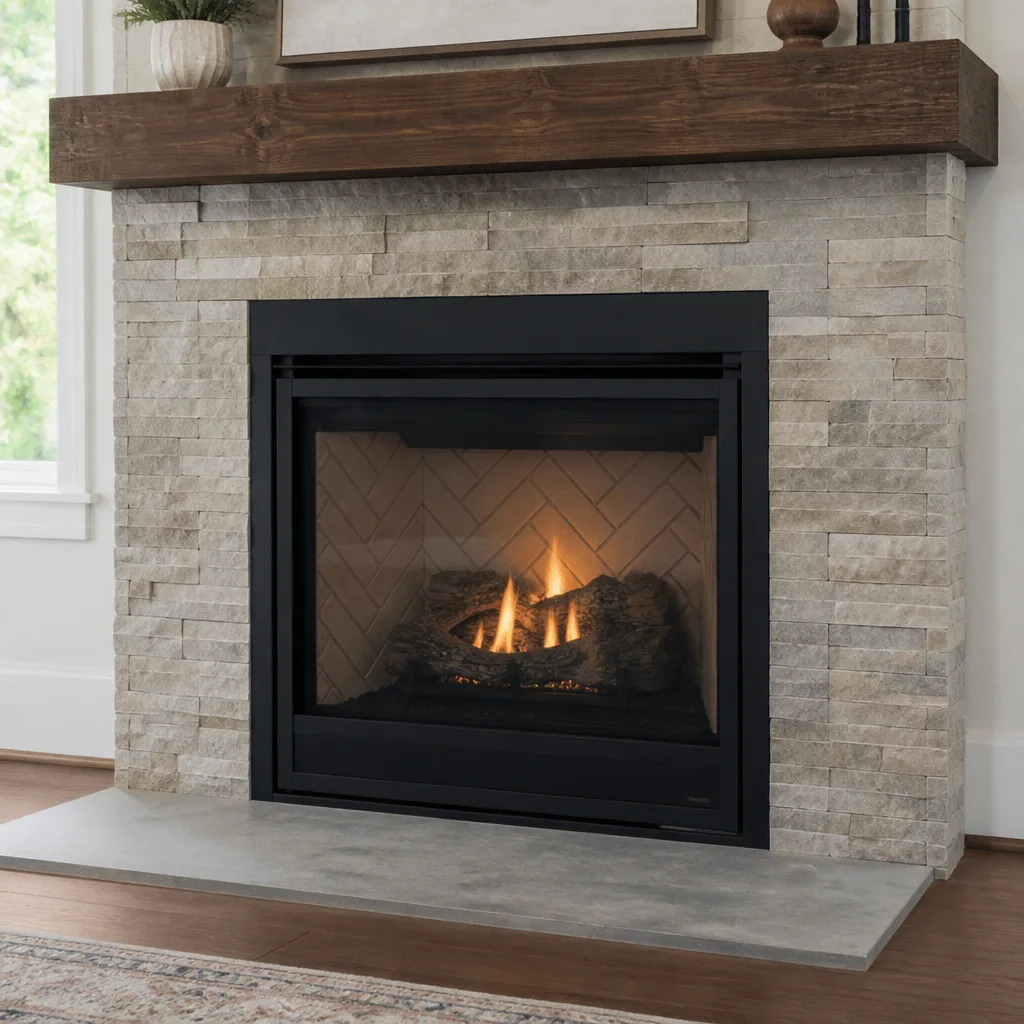
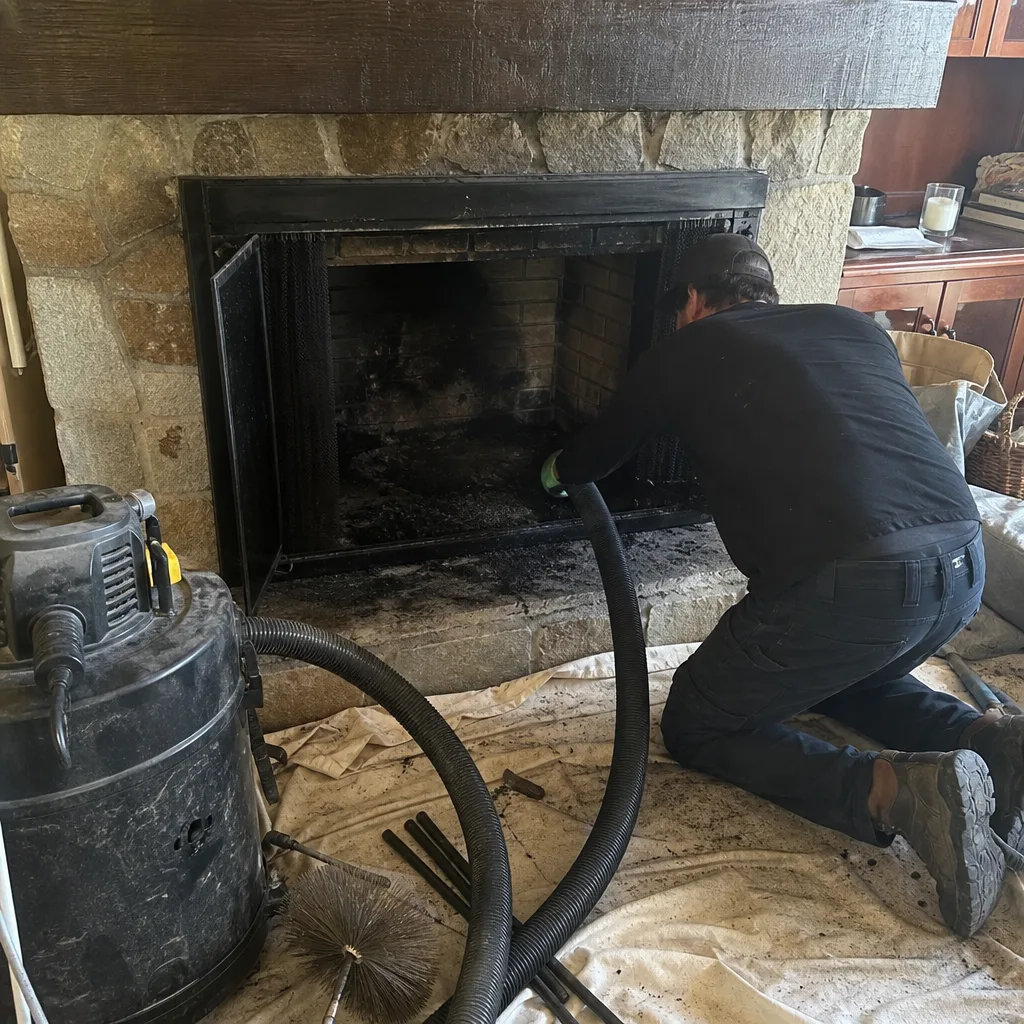 Before
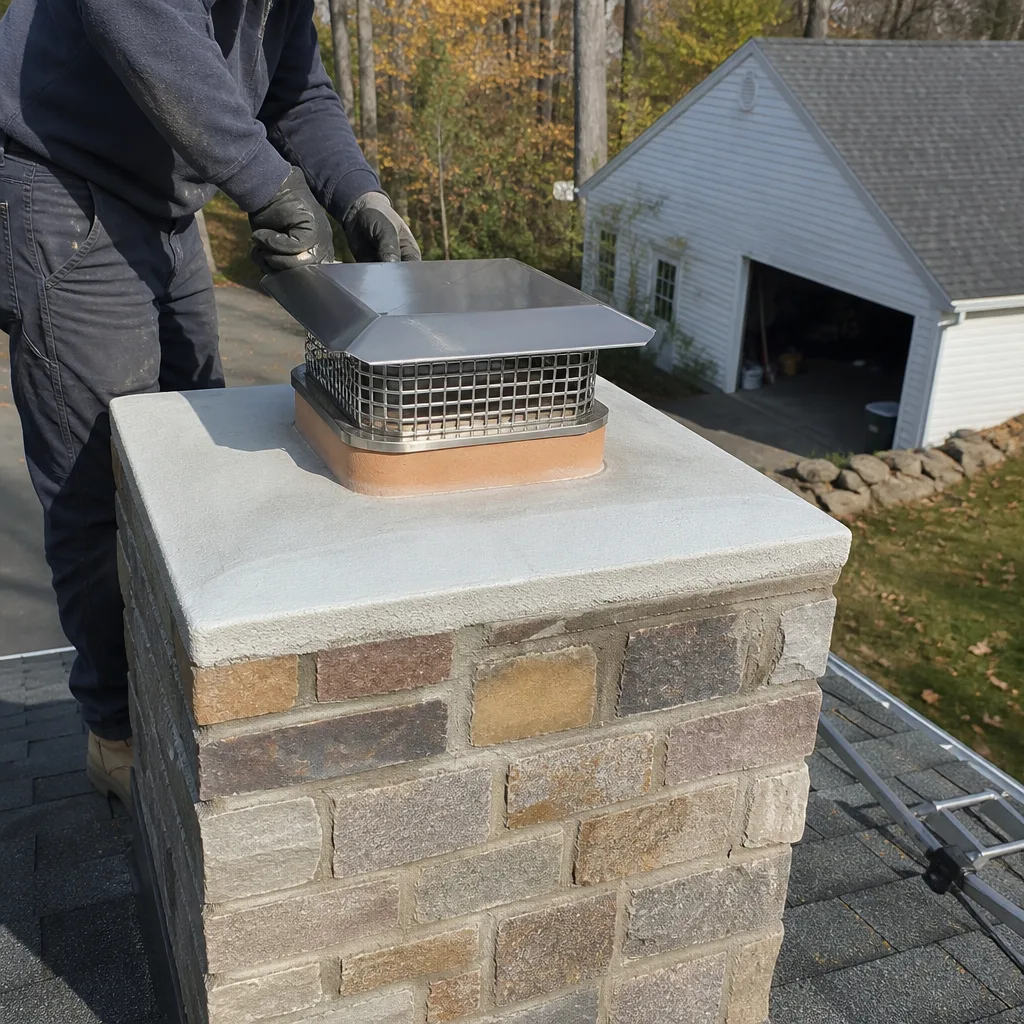 After
After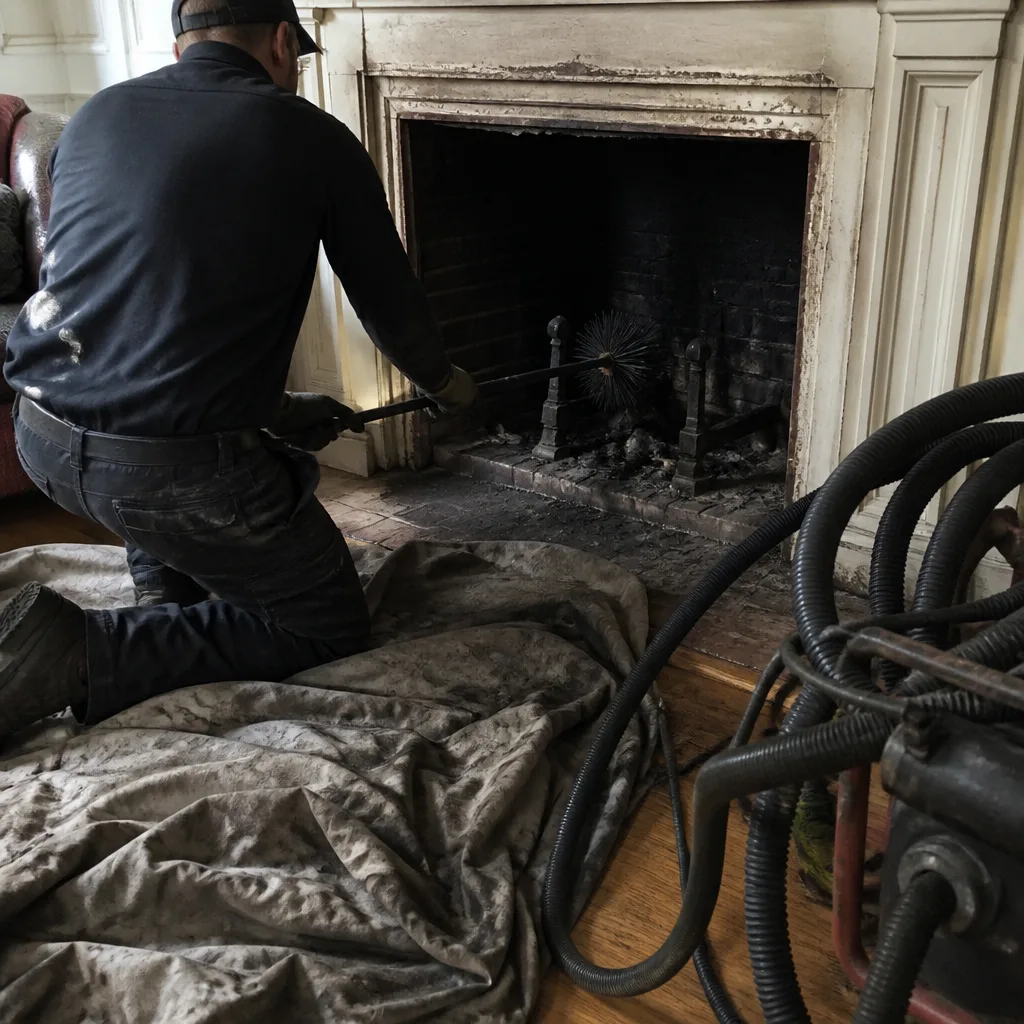 Before
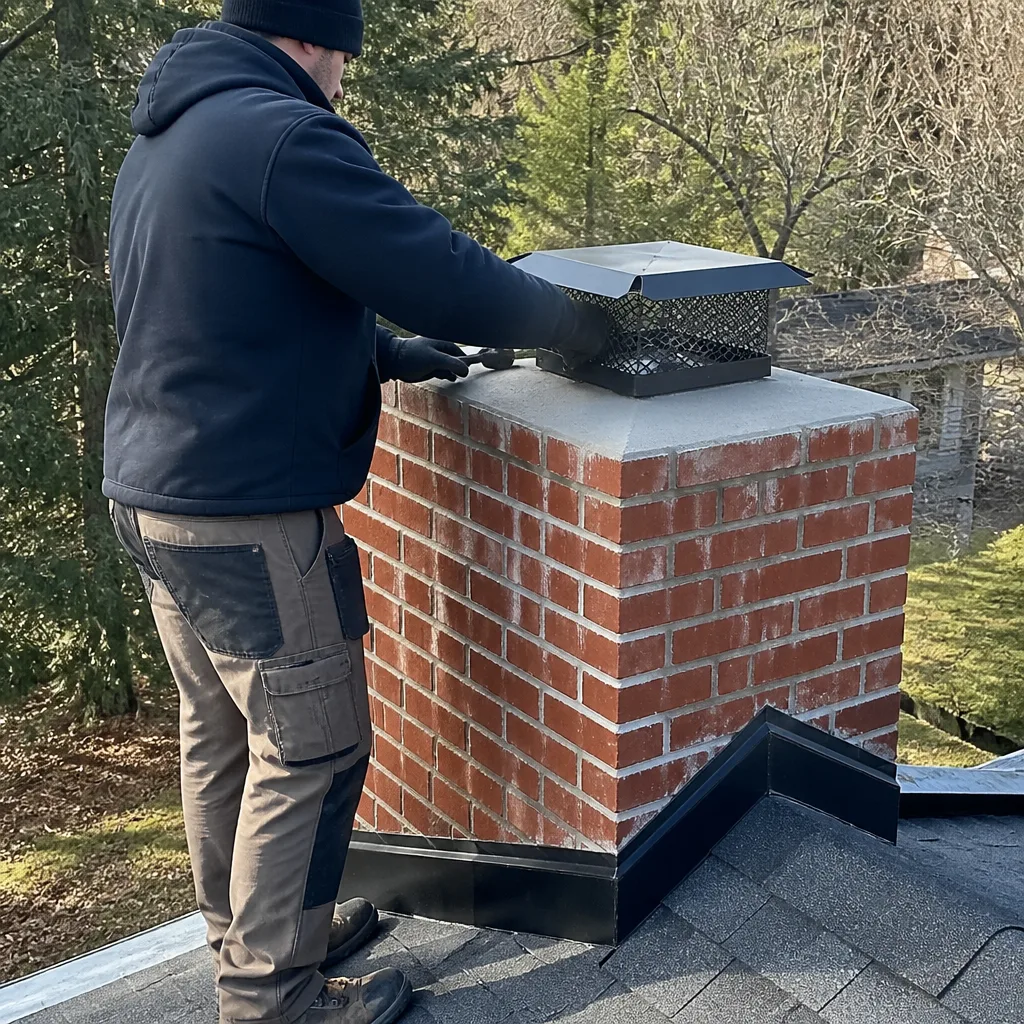 After
After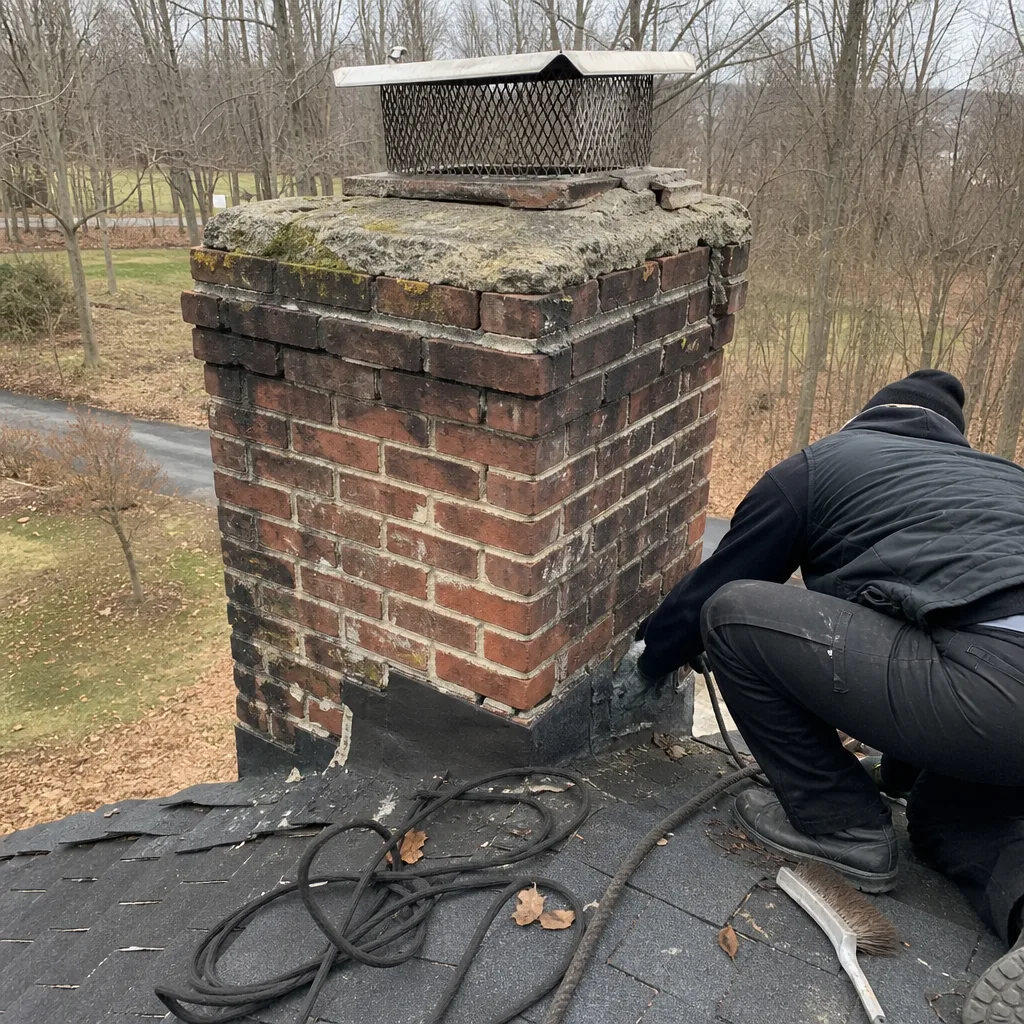 Before
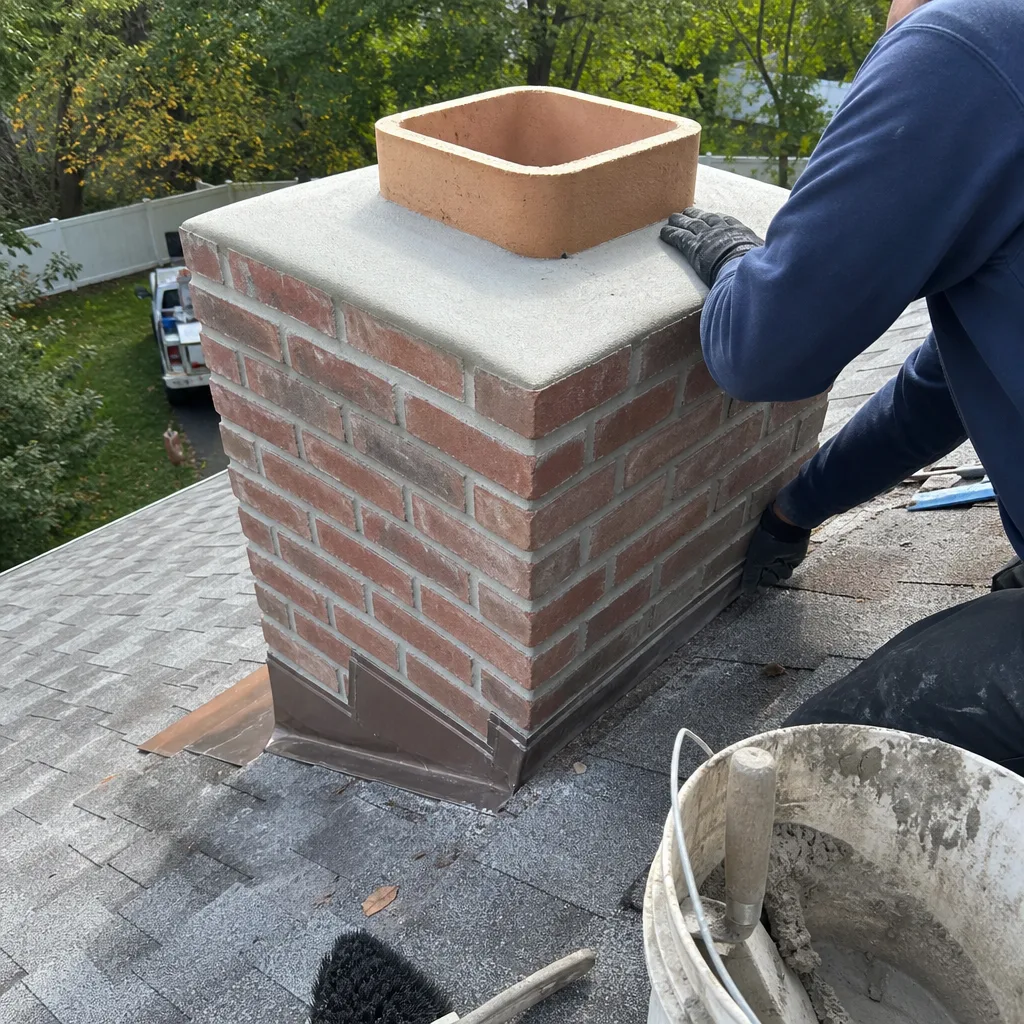 After
AfterThe Complete Guide to Chimney Cleaning in Bedford
Most chimney fires in Bedford-area homes are not caused by neglect - they’re caused by homeowners who cleaned on the wrong schedule for the wrong fuel type, thinking they were doing everything right. In our 42 years serving Westchester County, we’ve seen conscientious owners in Katonah and Bedford Hills sweep annually with soft brushes designed for prefab systems, while their 1940s masonry flues accumulated rock-hard third-degree creosote that no amateur tool could touch. This guide explains how Bedford’s specific combination of older housing stock, heavy hardwood-burning culture, and wet winters creates conditions that generic advice simply misses. For seasonal chimney cleaning care tailored to Bedford homeowners, timing your maintenance with local weather patterns is essential. You’ll learn the right cleaning frequency for your chimney type, how to read an inspection report, what “done” actually looks like, and when a sweep is protecting you versus selling you something you don’t need.
Quick Answer
Chimney cleaning in Bedford, NY typically costs between $225 and $395 for a standard Level 1 sweep with inspection, and should be performed annually for wood-burning systems and every two to three years for gas inserts. If you’re weighing DIY vs professional chimney cleaning for your Bedford home, understand that proper inspection equipment alone often exceeds the cost of hiring a certified sweep. Bedford’s prevalence of 1920s-1960s masonry chimneys, combined with heavy oak and maple burning, means most local homeowners need Level 2 camera inspections every 3-5 years to catch moisture and creosote damage that visual checks miss. Call (914) 409-9387 for a free estimate - we’ll inspect first, then quote, with no obligation.
Table of Contents
- Why Bedford Chimneys Are Different
- How Often Should You Clean Your Chimney in Bedford?
- Level 1, 2, and 3 Inspections: What Bedford Homeowners Actually Need
- What “Done” Actually Looks Like
- How to Read a Post-Cleaning Inspection Report
- Chimney Cleaning Costs in Bedford
- Common Mistakes to Avoid
- When to Call a Professional
- Frequently Asked Questions
- The Bottom Line
Why Bedford Chimneys Are Different
Bedford is not a generic suburb. The town’s building stock skews older than most Westchester communities - substantial portions of Bedford Village, Katonah, and Bedford Hills were built between 1920 and 1965, when masonry chimneys were constructed with clay flue tiles, parged mortar joints, and no thought to modern airtight construction. These chimneys were designed for coal and early oil heat, then adapted to wood-burning fireplaces and later to inserts. Each adaptation left compromises.
The local climate compounds the problem. Bedford sits at roughly 380 feet elevation with higher pockets in Bedford Hills, receiving 48-50 inches of annual precipitation - significantly more than coastal Westchester. Wet winters freeze and thaw masonry repeatedly. We’ve removed flue tiles in Katonah homes that shattered from thermal shock after water intrusion, and found mortar joints in Bedford Village turned to sand from decades of freeze-thaw cycling. A chimney that looks sound from the hearth can be structurally compromised above the roofline where inspection is difficult.
Fuel culture matters too. Westchester’s hardwood forests supply local cordwood markets with dense oak, maple, and cherry. These species burn longer and cleaner than softwoods when properly seasoned, but Bedford homeowners often burn wood at 18-22% moisture content - greener than the 15-20% ideal. Slower, cooler fires with marginal wood produce exactly the conditions for third-degree creosote: a hard, tar-like, highly combustible deposit that standard brushes won’t remove. In our experience, Bedford hardwood burners develop this deposit more predictably than softwood regions, but on a longer timeline that lulls owners into skipping years.
The construction methods of Bedford’s era also created specific vulnerabilities:
- Unlined chimneys: Pre-1940s homes often have no clay flue liner at all, just brick exposed to combustion byproducts. These require specialized cleaning protocols and are candidates for stainless steel relining with DuraFlex or similar systems.
- Single-wythe construction: Many Bedford chimneys were built with a single thickness of brick rather than the double-wyhe standard of later codes. They’re more susceptible to heat transfer and exterior deterioration.
- Shallow hearths: Period fireplaces in Bedford Village often have hearths too shallow for modern inserts, leading to installation compromises that affect draft and creosote accumulation.
This is why a chimney sweep who treats your 1935 Bedford chimney like a 2015 prefab system is doing you no favors. The cleaning method, inspection level, and maintenance schedule all depend on what was built, when, and how it’s been modified.
How Often Should You Clean Your Chimney in Bedford?
The National Fire Protection Association Standard 211 states that chimneys, fireplaces, and vents shall be inspected at least once a year, and cleaned as necessary. “As necessary” is where Bedford specifics matter. Here’s how we apply that standard locally:
Wood-Burning Fireplaces and Stoves
Annual sweeping is the minimum for active wood burners in Bedford. But “active” has a local definition. A family burning three cords of seasoned hardwood through a modern EPA-certified stove may need only a Level 1 cleaning yearly. The same family burning four cords of marginal wood through a 1980s insert may need mid-season attention.
We judge by deposit thickness, not calendar alone. The Chimney Safety Institute of America recommends cleaning when soot and creosote reach 1/8 inch accumulation. In Bedford, we find this threshold crossed at different rates depending on:
- Wood species and moisture: Oak and maple at 25% moisture - common with “seasoned” cordwood purchased too green - can reach 1/8 inch in 40-60 fires. Properly seasoned hardwood at 15% may take 80-100 fires.
- Burning practices: Smoldering overnight fires for “banked” heat, popular among older Bedford homeowners, are creosote factories. Hot, active fires with full air supply burn cleaner.
- Appliance efficiency: Older non-EPA stoves in Bedford Hills and Katonah ranch homes often run cooler by design, depositing more unburned hydrocarbons in the flue.
- Flue dimensions: Oversized flues common in converted coal chimneys create lazy draft and rapid creosote buildup.
For Bedford’s typical hardwood-burning household, we recommend:
- Annual Level 1 inspection and cleaning for all active wood-burning systems
- Level 2 camera inspection every 3 years, or at property transfer, or after any chimney fire or seismic event
- Mid-season evaluation if you notice reduced draft, visible smoke spillage, or unusual odors
Gas Fireplaces and Inserts
Gas systems in Bedford need less frequent sweeping - every 2-3 years for vented units, with annual inspection of termination caps and venting. But don’t assume “clean burning” means “maintenance free.” We’ve found bird nests in Bedford Hills gas terminations, deteriorated flex connectors in Bedford Village condos, and condensation damage in high-efficiency direct-vent systems throughout the town. The moisture from Bedford’s wet climate accelerates corrosion in gas venting components.
Oil and Pellet Systems
Oil flues should be inspected and cleaned annually - the sulfur in fuel oil combines with moisture to form corrosive deposits. Pellet stoves, increasingly common in Bedford’s environmental-conscious households, need professional cleaning of the venting system every 1-2 tons of pellets burned, typically annually for primary heat users.
Level 1, 2, and 3 Inspections: What Bedford Homeowners Actually Need
NFPA 211 defines three inspection levels, and most Bedford homeowners have encountered confusion about which applies when. Here’s the practical breakdown from our four decades in Westchester County.
Level 1 Inspection
This is the standard annual service - accessible inspection of readily accessible portions of the chimney exterior, interior, and connecting appliances. No tools required beyond a flashlight and mirror, though we always use a camera for documentation even at Level 1.
For Bedford, a Level 1 is appropriate when:
- Your appliance and venting system are unchanged from last year’s inspection
- You’re burning the same fuel, at the same frequency, with the same wood source
- No operational problems, odors, or performance changes have occurred
- You’re maintaining the established cleaning schedule
What a proper Level 1 includes in our practice: visual inspection of the firebox, damper, smoke chamber, and accessible flue; exterior examination of the chimney crown, cap, flashing, and brick condition; documentation photos; and the sweep itself using brushes matched to your flue size and material.
Level 2 Inspection
This is where Bedford’s older housing stock makes Level 2 work more common than in newer markets. A Level 2 includes everything in Level 1 plus examination of accessible attics, crawl spaces, and basements, and - critically - a video scan of the internal flue surface.
We recommend Level 2 for Bedford homeowners when:
- You’re buying or selling a home - required by most Westchester County real estate attorneys and prudent regardless
- You’re changing appliance type (wood to gas, fireplace to insert) or fuel
- There’s been a chimney fire, lightning strike, earthquake, or significant weather event - Bedford’s mature trees cause more chimney strikes than most owners realize
- It’s been 3+ years since your last internal camera evaluation
- You’ve noticed performance changes: smoking back into the room, odd odors, visible exterior staining
The camera inspection reveals what no mirror can. In a 1950s Katonah colonial last season, our Level 2 scan found a vertical crack in the flue tile extending 14 feet - invisible from below, undetectable without the camera, and a clear carbon monoxide pathway into the bedroom above. The homeowner had lived with it for 12 years of annual Level 1-only service from another company.
Our Level 2 inspections end with photos you can see and a plain-English verdict. No engineering jargon, no pressure. Just: here’s what we found, here’s what it means, here’s what we recommend and why.
Level 3 Inspection
Level 3 is invasive - removal of building materials, demolition of chimney portions, or other destructive investigation to access concealed areas. It’s rare and only indicated when a Level 1 or 2 suggests a serious hazard that cannot be confirmed otherwise.
In Bedford, we’ve ordered Level 3 work perhaps a dozen times in 42 years. Examples: suspected pyrolysis of adjacent framing after a chimney fire in a Bedford Village cape; investigation of structural movement in a 1920s chimney showing exterior bulging; and confirmation of liner collapse after a seismic event. Level 3 is not a sales tactic. It’s a diagnostic last resort, and any sweep proposing it should show you the Level 2 evidence that makes it necessary.
What “Done” Actually Looks Like
There’s no universal standard for “clean” in chimney sweeping, which is part of the problem. One sweep’s acceptable residual layer is another’s callback. Here’s what we verify before signing off on any Bedford job.
The Physical Standard
A properly cleaned flue should have no measurable creosote deposits - defined as less than 1/32 inch of soot or ash residue. Third-degree creosote, once removed, may leave staining on masonry that cannot be eliminated without aggressive methods that damage the flue. We document this: the flue is clean, but historic glazing remains, and we note the location for future monitoring.
Specific checkpoints:
- Flue surface: Brushes should contact all 360 degrees. In rectangular clay tile flues common in Bedford, corner brushes are essential - straight rods miss the corners where creosote concentrates.
- Smoke chamber: The area above the damper and below the flue tile must be scraped smooth. This is the most common shortcut in inferior sweeps; it’s awkward to reach and easy to skip.
- Firebox: Ash and debris removed, brick or refractory panels inspected for cracks, grate positioned correctly.
- Smoke shelf: Cleaned and inspected - a collection point for fallen debris that can block draft.
- Damper: Full range of motion, proper seating, no warping or corrosion.
The Documentation Standard
We don’t consider a job complete without photo documentation. Our technicians capture before, during, and after images of the flue interior, smoke chamber, and any conditions requiring attention. You receive these with your report. If a sweep hands you a paper receipt and no images, you have no verification of what was or wasn’t found.
The report itself should specify:
- Chimney type, dimensions, and liner material
- Appliance connected, manufacturer, and model if visible
- Deposit type and thickness found (first, second, or third-degree creosote; soot; debris)
- Cleaning method and tools used
- Post-cleaning condition of all accessible components
- Recommended repairs or monitoring, with priority ranking
- Date of next recommended service
What “Done” Does Not Mean
Completion of a sweep does not mean your chimney is “certified safe” for indefinite use. It means it’s clean and inspected as of this date, with noted conditions. A cracked crown noted in your report won’t heal itself. Spalling brick in the Bedford winter will worsen. The sweep is a snapshot; the report is your maintenance roadmap.
We also do not consider a job done if we’ve recommended repairs and you don’t understand why. Our technicians explain every finding before leaving. If you can’t explain it to your spouse, we haven’t done our job.
How to Read a Post-Cleaning Inspection Report
Bedford homeowners receive inspection reports with widely varying quality - from handwritten checklists to 30-page digital documents. Here’s how to extract what matters and spot red flags that affect your next heating season.
Understanding Priority Classifications
We use a three-tier system common to professional sweeps, though terminology varies:
- Priority 1 - Safety Hazard: Conditions presenting immediate risk of fire, carbon monoxide intrusion, or structural failure. Examples: active flue liner crack, blocked vent, detached connector pipe, significant creosote glaze remaining after cleaning. These require action before next use.
- Priority 2 - Repair Recommended: Conditions that will become Priority 1 if unaddressed, or that significantly impair efficiency. Examples: deteriorating crown with minor cracking, partial mortar joint failure, damaged but functional damper. Address within the current season or before next heating season.
- Priority 3 - Monitor/Maintain: Conditions worth tracking but not urgent. Examples: minor spalling on exterior brick, slight staining indicating past minor water intrusion, aging but functional cap. Note for next inspection.
Photo Red Flags to Understand
When your report includes camera images, here’s what specific findings mean for Bedford’s climate and housing stock:
Vertical cracks in flue tile: These open and close with temperature cycling. In Bedford’s freeze-thaw climate, water enters, freezes, and widens cracks progressively. A hairline crack in October can be a structural gap by March. We recommend repair or relining before the next heating season.
Glazed creosote (shiny black, tar-like): Indicates past smoldering fires or marginal wood. In Bedford hardwood burners, this develops slowly and is often missed until Level 2 inspection. Removal requires chemical treatment or rotary methods - standard brushing won’t touch it. Left in place, it has the energy content of raw fuel and ignites at approximately 451°F.
Spalled or missing mortar between flue tiles: The mortar joint is your secondary seal. When it fails, combustion gases migrate to the chimney interior, accelerating masonry deterioration and creating carbon monoxide pathways. Common in Bedford’s older chimneys where original parging has degraded.
White efflorescence or green staining: Moisture intrusion signatures. In Bedford’s wet environment, exterior staining often indicates failed crown, cap, or flashing. Interior staining suggests condensation from improper vent sizing or insufficient draft.
Stainless steel liner with deformation or seam separation: If your chimney was relined with DuraFlex or similar, look for dents from falling debris, corrosion at the top, or gaps at connections. These liners have 15-25 year lifespans depending on installation quality and fuel type.
Questions to Ask Your Sweep
If any finding is unclear, ask specifically:
- “Can you show me this on the photo and explain what I’m looking at?”
- “What happens if I do nothing until next year?”
- “Is this repair for safety, efficiency, or longevity?”
- “Will you provide a written estimate with no obligation?”
At Chimney Cleaning & Sweep in Bedford, we welcome these questions. A sweep who becomes impatient or vague when you ask for explanation is telling you something important about their business model.
Chimney Cleaning Costs in Bedford
Pricing transparency matters to homeowners who’ve been burned by contractors before. Here’s what chimney cleaning costs in the Bedford market, with the variables that move the number.
Standard Service Pricing
| Service | Typical Range in Bedford | What’s Included |
|---|---|---|
| Level 1 Sweep & Inspection | $225 - $295 | Standard cleaning, visual inspection, basic documentation |
| Level 1 with Photo Documentation | $265 - $340 | Above plus interior/exterior photos, written condition report |
| Level 2 Camera Inspection | $325 - $395 | Video flue scan, attic/crawl space examination, full report with images |
| Level 2 with Sweep | $375 - $450 | Combined cleaning and camera inspection |
| Third-Degree Creosote Removal | $450 - $650 | Chemical treatment or rotary cleaning for glazed deposits |
| Gas Fireplace Service & Inspection | $175 - $250 | burner cleaning, vent inspection, safety check |
What Affects Your Price
Several Bedford-specific factors can move you within or above these ranges:
- Chimney accessibility: Steep roofs, multiple stories, or dense landscaping around Bedford’s mature properties may require additional setup time or equipment.
- Appliance type and condition: A straightforward open fireplace cleans faster than a heavily sooted insert with baffles that must be removed.
- Debris or obstructions: Bird nests, fallen masonry, or collapsed liner sections require removal before cleaning can proceed.
- Travel and scheduling: Some operators charge premiums for Bedford Hills or remote Katonah properties; we price by job, not ZIP code.
Our Pricing Commitment
We provide no-hassle upfront pricing - the number on the estimate is the number on the invoice. No surprises, no “while we were up there” add-ons without your explicit approval. Our current standing offers include $50 off any repair over $250, free second opinion on any written estimate, an $89 seasonal tune-up special, and a permanent 5% senior and veteran discount.
Be wary of Bedford-area sweeps advertising “$99 chimney cleaning” or similar. In our experience, these are loss-leader inspections designed to find expensive “necessary” repairs - often with no photo evidence. A proper sweep takes 60-90 minutes for a standard system, plus travel, equipment, insurance, and training. The math on $99 doesn’t work without upselling.
For Chimney Repair in Bedford or more complex services, we’ll inspect first and provide a written estimate you can compare. Our Hearthstone Chimney Co. home page lists our full service range.
Common Mistakes to Avoid
- Cleaning on a fixed schedule regardless of use. Annual sweeping is right for active burners, but a gas fireplace used twice yearly doesn’t need the same service as a primary wood stove. Match frequency to actual use and fuel type, not a calendar alone.
- Assuming “no smell, no problem.” Carbon monoxide is odorless. A blocked or deteriorating flue can vent poorly for years before obvious symptoms appear. In Bedford’s older homes with multiple chimney modifications, hidden deterioration is common.
- Using the wrong brush for the flue material. Polypropylene brushes on stainless steel liners cause static and poor cleaning. Wire brushes on clay tile can score and weaken the surface. We match tools to liner type - a basic step some competitors skip.
- Ignoring the smoke chamber. This angled area above the damper is where most chimney fires begin, yet it’s the hardest to reach and most often shortcutted. Ask your sweep specifically how they accessed and cleaned this area.
- Skipping inspection after a chimney fire. Even a small, self-extinguished fire can crack flue tiles, damage mortar, or warp metal components. A Level 2 inspection is essential - not optional - after any suspected fire event.
- Hiring based on price alone. The lowest bid rarely includes proper documentation, adequate insurance, or recourse if something goes wrong. In Bedford’s high-value housing market, uninsured or improperly certified sweeps create liability that can fall to the homeowner.
- Neglecting the exterior. Crown, cap, and flashing failures admit water that destroys chimneys from the outside. A clean flue means little if the crown is crumbling. We inspect both as standard practice.
When to Call a Professional
Certain conditions require prompt professional evaluation, not scheduling convenience. Call a certified sweep immediately if you notice smoke backing into the room during normal operation, a strong tar or creosote odor during heating season, visible cracks in the firebox or exterior masonry, pieces of tile or brick in the fireplace, a damper that won’t fully open or close, or any evidence of a prior chimney fire (puffy creosote residue, discored metal, warped components).
For Bedford homeowners, we also recommend professional evaluation before purchasing any home with a fireplace or chimney, before installing any new appliance or changing fuels, and after any significant weather event involving high winds, lightning, or falling trees - common in our wooded terrain. Explore our more guides & resources for additional homeowner tips across Westchester County.
Hearthstone Chimney Co. offers free estimates in Bedford. A live person answers our phones 24 hours a day, 7 days a week - not a voicemail, not a callback queue. Call (914) 409-9387 to schedule, or to discuss whether your situation needs immediate attention or can wait for routine scheduling. We’ll tell you plainly.
Frequently Asked Questions
A standard Level 1 chimney sweep and inspection in Bedford typically runs $225 to $295, while a Level 2 inspection with camera scan ranges from $325 to $395. Third-degree creosote removal or difficult access can push costs to $450-$650. We provide upfront pricing before any work begins, and estimates are always free. Call (914) 409-9387 for an exact quote based on your specific chimney.
Not always. A properly sized, intact clay flue tile system in a masonry chimney may need no modification. We recommend relining when flue tiles are cracked, mortar joints have failed, the chimney is unlined, or you’re installing a new appliance with different venting requirements. We never recommend relining without camera evidence you can see yourself, and we’ll tell you plainly when a repair can wait. Our relining work uses DuraFlex stainless steel or HeatShield cerfractory systems when appropriate.
Active wood-burning systems in Bedford need annual sweeping due to hardwood creosote accumulation and our wet climate’s effect on masonry. Gas systems typically need inspection every 2-3 years with cleaning as needed. Oil flues require annual service. The specific frequency depends on your fuel, burning habits, and chimney type - we’ll assess this during your first visit and recommend a schedule.
Skipped maintenance leads to progressive creosote buildup, which restricts draft and increases fire risk. In Bedford’s older chimneys, the combination of glazed creosote and deteriorated mortar can allow chimney fires to breach the flue and ignite adjacent framing. Carbon monoxide intrusion through cracked flue tiles is the less visible but equally serious risk. These outcomes develop gradually - which is why they’re often ignored until an emergency.
A sweep is the physical cleaning of deposits and debris. An inspection is the evaluation of structural and functional condition. They’re related but distinct - a chimney can be clean and unsafe (cracked liner, for example), or dirty but structurally sound. Our standard service combines both, with the inspection level matched to your situation.
Basic maintenance like ash removal and glass cleaning is fine for homeowners. But flue cleaning requires proper brushes, rods, and access equipment that most homeowners don’t maintain. More importantly, the inspection component - identifying cracked tiles, mortar failure, or liner damage - requires training and camera equipment. For Bedford’s older masonry chimneys, we recommend professional service. The risk of missing a critical condition far exceeds the cost of proper maintenance.
The Bottom Line
Chimney cleaning in Bedford is not a commodity service. The town’s older masonry stock, hardwood-burning culture, and demanding climate create conditions that require specific expertise, proper inspection levels, and honest communication about what matters and what can wait. The right sweep cleans thoroughly, documents completely, explains plainly, and stands behind the work. Anything less leaves you guessing about the safety of the system heating your home.
We’ve served Bedford and Westchester County for over 42 years. Our approach hasn’t changed: inspect first, explain honestly, quote upfront, and fix it right. If it’s not right, we come back - in writing, no arguing. That’s the 90-Day Done Right Promise, and it’s how we’ve stayed in business since 1984.
Call (914) 409-9387 for a free estimate. A live person will answer, 24 hours a day, and we’ll schedule at your convenience. For Fireplace Services in Bedford or any chimney need, we’re here when you need us.
Written by Russell Haines, Owner at Hearthstone Chimney Co., serving Bedford since 2014.